

Views: 0 Author: Site Editor Publish Time: 2026-07-26 Origin: Site


Purchasing the right footwear shapes your entire workday. Relying on inadequate boots creates unnecessary risks. It can turn a routine shift into a painful ordeal. Purchasing the wrong rubber footwear leads to rapid material degradation. It accelerates workday fatigue. It also introduces potential safety liabilities in hazardous environments. You need dependable gear built to withstand harsh daily realities.
We provide a technical breakdown of fit mechanics, safety certifications, and material durability. This approach ensures you maximize your long-term return on investment. You will discover an evidence-based framework to evaluate footwear based on actual job-site demands. Whether you tackle concrete pouring or heavy agricultural work, you will learn exactly what specifications matter most.
A reliable rubber boot size guide focuses on heel lock and calf clearance, not just toe length, to prevent blisters and fatigue.
True durability relies on material formulation (e.g., vulcanized rubber vs. PVC) and seam construction to prevent premature cracking.
Safety requirements must match the environment: assess chemical resistance, electrical hazard (EH) ratings, and toe protection type.
Cost-per-wear is a better metric than upfront price; high-quality construction prevents the need for mid-season replacements.
Finding the perfect fit requires more than matching your everyday shoe size. Work footwear functions differently because rigid materials do not stretch. You must evaluate how the boot locks onto your foot structure. Consulting a proper rubber boot size guide helps you avoid chronic foot pain. It ensures you maintain agility in challenging environments.
Many first-time buyers panic when they feel their heel moving. A slight heel slip is actually necessary initially. You should expect about 1/4 to 1/2 inch of vertical movement. The stiff rubber upper requires a break-in period. As you walk, the outsole flexes. The upper material softens around your ankle. Over a few weeks, this initial slippage disappears. The boot molds to your unique stride. If you buy a size completely devoid of slip, you risk severe heel blisters.
The instep bridges the top of your foot. A proper boot transitions snugly from the foot up through the ankle. This tight transition area creates an "ankle lock." Without a secure ankle lock, deep mud creates a suction effect. This suction can literally pull the footwear right off your foot. When trying on pairs, pay attention to the pressure across the top of your foot. It should feel firm but not restrictive. You want enough hold to defeat mud suction.
Calf clearance represents a major pain point for many workers. Men possessing wider calves often suffer from poor circulation caused by tight boot shafts. Look for models featuring adjustable rear or side gussets. These expandable panels accommodate varying leg shapes. They also allow you to tuck in heavy insulated work pants safely. Proper calf clearance prevents chafing during long walking shifts.
Your intended sock choice completely dictates your final sizing decision. Follow these sizing steps to guarantee accuracy:
Identify the season: Determine if you will wear thick thermal socks or thin moisture-wicking liners.
Test the volume: Put on your chosen work socks before testing any footwear.
Check the toe box: Ensure you can wiggle your toes freely. Tight toes lead to frostbite in freezing conditions.
Adjust for half sizes: If you measure as a half size, generally size up to accommodate thicker socks. Add an aftermarket insole if the volume feels too loose.
Work footwear faces relentless abuse. Investing in high-quality Rubber Boots requires inspecting construction details closely. Understanding material science helps you predict longevity. You can identify inferior products before you spend your money.
Different job sites demand distinct material properties. Vulcanized rubber undergoes a heat and pressure curing process. This manufacturing method yields incredible elasticity. It provides superior tear resistance and overall longevity. Vulcanized materials remain pliable in freezing temperatures.
Polyurethane and PVC offer different advantages. These synthetic compounds feel significantly lighter on the foot. They provide exceptional resistance to specific harsh chemicals. However, PVC often turns rigid and uncomfortable in extreme cold. Neoprene serves primarily as an insulating upper material. It delivers excellent flexibility and warmth but requires a protective rubber shell over the foot area.
Comparison of Footwear Materials
Material Type | Best Use Environment | Primary Advantages | Potential Drawbacks |
|---|---|---|---|
Vulcanized Rubber | Forestry, general construction, farming | High elasticity, excellent cold-weather flex, long lifespan | Heavier overall weight |
Polyurethane / PVC | Chemical plants, food processing, concrete | Lightweight, highly chemical resistant, easy to sanitize | Stiffens in extreme cold, prone to cracking under high flex |
Neoprene (Uppers) | Hunting, stationary winter work, fishing | Superior insulation, highly flexible, comfortable | Can snag on thorns, not entirely waterproof if submerged deep |
Boots rarely wear out evenly. They typically fail at specific high-stress flex points. The most vulnerable area sits right above the ball of the foot. This zone bends with every single step. Inferior materials quickly develop micro-tears here. These tears expand into full structural blowouts. Inspect the ankle crease area as well. Look for reinforced layering in these zones. Extra material thickness at the toe bend indicates thoughtful engineering.
Traction dictates safety. Outsole tread patterns must match your working surface. If you navigate thick mud, you need self-cleaning lug designs. These deep, widely spaced lugs shed debris naturally as you walk. Packed mud turns boots into dangerous ice skates. Conversely, if you work on wet concrete or smooth dairy parlor floors, deep lugs fail. You need siped flat soles. Siping involves cutting tiny slits into the rubber. These slits expand to grip wet, smooth surfaces effectively.
Common Mistakes to Avoid:
Storing boots in the bed of a pickup truck where UV rays destroy the rubber compounds.
Leaving wet mud caked on the flex points, which draws out essential moisture and accelerates cracking.
Drying footwear directly next to a roaring space heater, causing the seams to melt and separate.
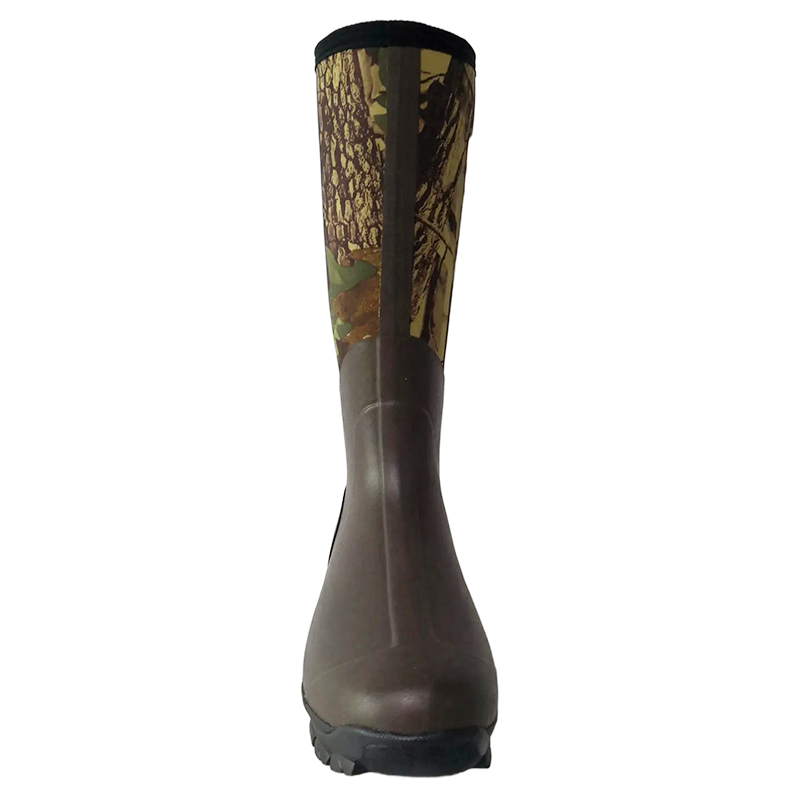
Comfort means nothing if your footwear fails to protect you. When selecting men's work gumboots, align the specifications directly with your daily hazards. General-purpose boots cannot survive specialized industrial environments.
Dropped tools and heavy machinery threaten your toes daily. You must decide between steel and composite toe caps. Steel toes provide maximum impact protection. They boast a thinner profile, which reduces bulk. However, steel conducts ambient temperature. It will freeze your toes in winter and roast them in summer. Composite toes utilize strong non-metallic materials like Kevlar or carbon fiber. They feel noticeably lighter. They do not transfer extreme temperatures. They also pass smoothly through metal detectors at secure facilities.
Industrial chemicals destroy standard footwear in days. Concrete workers face highly alkaline environments. Wet cement rapidly eats through basic materials, leading to severe chemical burns on the skin. You need specialized alkali-resistant footwear. Agricultural workers face different threats. Barnyard acids and animal waste possess highly corrosive properties. Always verify chemical resistance ratings. Look for specialized polyurethane blends designed specifically for these caustic environments.
Working around live wires requires specialized insulation. Electrical Hazard (EH) compliance is non-negotiable for utility workers or electricians. You must verify ASTM standards printed on the boot label. EH-rated outsoles utilize non-conductive materials. They provide a secondary source of protection against accidental contact with live electrical circuits. Never assume standard rubber automatically provides sufficient electrical insulation.
Demolition sites and forestry jobs hide sharp threats. Nails, shattered glass, and sharp branches easily pierce standard rubber soles. Puncture-resistant models feature a protective plate buried inside the midsole. Older designs utilize steel plates. Steel offers absolute protection but reduces sole flexibility. Modern designs utilize woven synthetic fabrics. These ballistic fabrics stop sharp objects while maintaining excellent flexibility and reducing overall weight.
You wear your boots for twelve hours a day. Internal comfort dictates your energy levels. Poorly designed interiors cause joint pain, skin irritation, and overwhelming fatigue. You must evaluate the internal ecosystem of the footwear.
Insulation needs vary wildly depending on your activity level. Neoprene thickness dictates warmth. A 5mm neoprene layer suits active, high-movement labor. The constant motion generates body heat. An 8mm or thicker layer is mandatory for stationary cold-weather work. Hunters sitting in freezing blinds require maximum insulation. Conversely, wearing insulated footwear in warm climates guarantees misery. Choose unlined, lightweight models for summer work. Unlined versions mitigate sweat accumulation and prevent overheating.
Standing on hard surfaces destroys your arches. Proper midsole support prevents plantar fasciitis and lower back pain. Look for EVA foam midsoles. EVA foam absorbs harsh impact shocks effectively. It cushions your heel with every step. If you spend time standing on ladder rungs or walking over rocky terrain, you need a built-in shank. A fiberglass or steel shank sits under the arch. It creates a rigid bridge. This bridge prevents the sole from folding around the ladder rung. It saves your arches from localized pressure.
Waterproof boots keep external water out. Unfortunately, they also trap internal sweat. This trapped moisture creates the dreaded "swamp foot" effect. Swamp foot causes painful blisters, fungal infections, and severe odor. Internal moisture management is critical. High-end models feature specialized internal mesh linings. These air-mesh linings create a microscopic gap between your skin and the rubber. They allow air to circulate. They wick sweat away from your socks. Always pair mesh-lined boots with merino wool or synthetic socks. Never wear cotton socks, as cotton traps moisture against your skin.
Best Practices for Internal Comfort:
Pull the insoles out every evening to allow the footbed to dry completely.
Use a boot dryer on a low, non-heated setting to circulate air overnight.
Rotate between two pairs of boots if you suffer from excessive foot perspiration.
The market offers countless options. Narrowing down your choices requires a logical framework. Shortlisting the best men's rubber boots ultimately comes down to analyzing your specific daily reality. Avoid buying features you do not actually need.
Categorize your choices by your primary environment. Heavy construction demands steel toes, puncture plates, and EH ratings. General outdoor utility work prioritizes flexibility, moderate tread, and easy slip-on designs. Hunting or stationary winter tasks demand extreme insulation, scent-control materials, and aggressive terrain traction. Do not buy a heavy logging boot for casual backyard landscaping.
Upfront price tags often deceive buyers. You must evaluate footwear using a cost-per-wear metric. Consider a cheap $40 pair of PVC boots. They might crack after three months of hard labor. You replace them four times a year, costing $160 annually, plus you suffer through blisters. Now consider a $150 pair featuring premium vulcanized construction and reinforced flex points. If they last three full years, your annual cost drops to $50. High-quality construction prevents the need for mid-season replacements. It acts as a shield for your joints and your wallet.
Even premium brands produce occasional defects. Always verify the manufacturer's defect warranty before purchasing. Read the fine print carefully. You want coverage that specifically addresses seam blowouts and sole separation. A robust one-year warranty signals brand confidence. Also, check the retailer's return policy. You need a grace period to test the fit indoors before committing to the purchase.
Do not test new footwear first thing in the morning. Your feet swell naturally throughout the workday. Recommend testing your shortlisted boots at the end of the day. Your feet reach their maximum volume in the late afternoon. Try them on wearing the exact socks intended for field use. Walk up and down stairs. Crouch down to simulate working on the ground. Check the ankle lock and the toe box clearance during these movements.
Evaluating specialized footwear requires a careful balancing act. You must harmonize daily comfort with non-negotiable safety standards. The right choice protects your joints from fatigue while shielding your toes from catastrophic impact. Focus heavily on proper heel lock and ample calf clearance to ensure mobility. Prioritize high-quality material formulations like vulcanized compounds for lasting flexibility. By calculating the true cost-per-wear and demanding specific safety certifications, you safeguard your livelihood. Prioritize fit and material quality above all else. This disciplined approach ensures long-term performance and prevents workplace injury.
A: Generally, you should size up if you wear a half size. Work boots do not stretch like leather. Sizing up accommodates thicker thermal socks or aftermarket orthotic insoles. Always check brand-specific sizing charts, as some manufacturers deliberately build extra volume into their standard sizes.
A: Cracking occurs due to material dry-out and UV damage. Keep them out of direct sunlight when not in use. Rinse off caustic mud, concrete dust, or agricultural chemicals daily. Apply a specialized rubber conditioning spray monthly to restore essential moisture and maintain flexibility.
A: The lower rubber shell is completely waterproof. The upper neoprene section is highly water-resistant. However, neoprene is essentially a spongy material. If you stand fully submerged in water above the rubber line for extended periods, the neoprene will eventually absorb water and become heavy.
A: You can apply temporary fixes using specialized marine sealants or flexible shoe adhesives. These work well for small punctures caused by thorns. However, if the boot suffers a structural split across a major flex point, sealants will quickly fail. Structural failures demand immediate replacement.


