

Views: 0 Author: Site Editor Publish Time: 2026-09-26 Origin: Site


Did you know poorly fitting rain boots remain a top cause of seasonal retail returns? Parents quickly reject footwear slowing down their active toddlers. Retailers and distributors face significant margin erosion when bulk footwear orders suffer from high return rates. Often, poor fit, heavy materials, or strong chemical odors trigger this costly backlash. Profitable sourcing requires aligning factory capabilities closely to strict parent demands. You must prioritize lightweight materials, proper toddler ergonomics, and non-toxic compliance to succeed in this competitive market. This article provides a strict, evidence-based evaluation framework to help you navigate overseas sourcing confidently. You will discover exactly how to vet manufacturers thoroughly and effectively. We also detail how to approve pre-production samples before committing to a large-scale purchase order. Protect your brand reputation and ensure consistent retail sell-through rates by implementing these proven, actionable steps today.
Material dictates performance: Shift focus from heavy traditional rubber to EVA and advanced PVC for lightweight, durable alternatives.
Sizing consistency is critical: Demand standardized mold grading and inner-sole measurements to avoid the #1 cause of e-commerce returns.
Compliance is non-negotiable: Never skip third-party validation for CPSIA (US) or REACH (EU) chemical safety standards.
Assess vendor scalability: Choose manufacturers that offer transparent tooling costs and flexible private-label customization options.
The first major hurdle in sourcing seasonal footwear involves material weight. Parents routinely complain on prominent forums like Reddit and BabyCenter regarding bulky boots. Traditional designs are often too heavy for early walkers. These clunky soles alter natural gaits and cause frequent tripping. You must address this weight problem early during the sourcing phase. A lighter boot drastically reduces friction during family outings and subsequent retail returns.
To navigate this challenge, you must evaluate three primary material categories carefully. Each material carries distinct manufacturing requirements and retail trade-offs.
Natural Rubber: This material offers high flexibility and strong eco-appeal. Environmentally conscious consumers often prefer rubber. However, rubber formulations are significantly heavier. They are also prone to blooming. Blooming refers to a white powdery oxidation appearing on the surface if factories mix the compound incorrectly.
EVA (Ethylene-Vinyl Acetate): EVA serves as the gold standard for lightweight kids rain boots. It feels incredibly light and provides excellent shock absorption. Toddlers benefit greatly from EVA designs. However, factories must utilize precise molding temperatures. Poorly molded EVA leads to rapid sole wear on concrete surfaces.
Advanced PVC: When vetting a kids PVC rain boots supplier, you must mandate phthalate-free formulations. Modern PVC offers the best cost-to-durability ratio for bulk retail. It resists scuffing and holds bright pigments beautifully.
You can reference the breakdown below to align your brand positioning with the right material choice.
Rain Boot Material Comparison Chart
Material Type | Key Advantage | Primary Drawback | Best Retail Application |
|---|---|---|---|
Natural Rubber | Eco-friendly and flexible | Heavy weight and potential blooming | Premium eco-conscious brands |
EVA Foam | Extremely lightweight | Prone to rapid abrasive wear | Toddler-specific early walker lines |
Advanced PVC | Highly durable and cost-effective | Requires strict phthalate testing | Mass-market retail channels |
Beware a major implementation risk regarding synthetic materials. Sourcing cheap, unrefined PVC often results in strong chemical off-gassing. When consumers open the shoebox, a harsh chemical odor escapes. This odor leads to immediate negative retail reviews and eroded brand trust. Always request uncolored material swatches to verify odor neutrality before placing production orders.
Parents prioritize functional footwear. Successful designs blend visual appeal directly into daily practicality. First, you must consider the ergonomics for early walkers. Pediatricians strongly recommend flat, zero-drop soles. A zero-drop sole keeps the heel level aligned properly to the toes. You also need wide toe boxes. A wide toe box aligns perfectly to natural pediatric foot development. It prevents toe cramping during crucial growth stages.
Next, buyers must apply "The Parent Test" to evaluate ease of use. A boot failing this practical test will languish on retail shelves. Check these specific design elements:
Integrated pull-on handles: Children love putting on their own shoes. Handles foster independence. However, you must check tear-resistance vigorously at the handle seams. Weak seams rip after just a few weeks of use.
Wider calf openings: Winter weather demands layered clothing. A narrow boot shaft frustrates parents trying to tuck thick winter pants inside. Specify wider calf openings to accommodate bulky winter clothing easily.
Moisture-wicking linings: Synthetic boots do not breathe naturally. You must include moisture-wicking cotton or soft fleece linings. These linings prevent common "sweaty feet" complaints and reduce interior odors significantly.
Finally, traction and outsole design determine outdoor safety. Deep, self-cleaning tread patterns are necessary for authentic slip resistance. Mud should fall away naturally as the child walks. Shallow treads clog quickly, creating a slippery surface. Visually inspect the depth of the tread on all pre-production samples. Run your thumb across the channels to ensure adequate depth and grip.
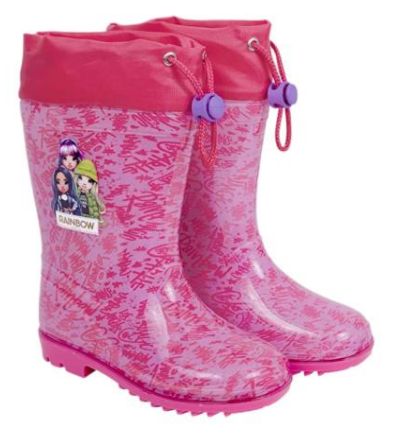
Nothing destroys profitability faster than the sizing discrepancy trap. Inconsistent sizing across a kids boot size range kills profit margins quickly through exchange logistics. When a size 8 fits like a size 6, consumers immediately initiate costly returns. You must establish rigorous evaluation criteria for factory sizing before production begins.
Start by verifying the factory’s size grading logic. Factories often use proprietary grading rules. Ensure they follow standard EU, US, and UK conversions accurately. Do not just approve the master size sample. Request inner sole lengths in precise centimeters for every single size in the production run. This data allows you to track proportional growth between sizes accurately.
You must also perform a critical assumption check. Do not assume a manufacturer's standard "toddler size 7" matches your target market’s standard. Asian factory molds often run smaller than North American expectations. Always measure the physical factory sample directly against established market leaders in your region. Adjust the sizing spec sheet accordingly before finalizing your mold requirements.
Once you verify dimensions, analyze the actual order composition. Assess the supplier's pre-packed size ratios carefully. Factories typically pack master cartons using predetermined ratios. A common standard is the 1-2-2-1 ratio across four consecutive sizes. You must ensure these ratios align securely to historical retail bell-curve demand. Over-ordering extreme sizes leaves dead stock in your warehouse. Under-ordering popular middle sizes causes costly stockouts during peak rainy seasons. Work closely alongside your inventory team to dictate exact carton ratios to the factory.
Children's products face intense regulatory scrutiny globally. Chemical safety remains paramount. Partnering with a reliable children's waterproof boots manufacturer means demanding total transparency regarding restricted substances. You cannot compromise on these regulations.
Key chemical testing focuses on two major areas. First, you must conduct Lead and Heavy Metals testing on all surface coatings and base materials. Second, you must secure phthalate-free certifications. These certifications remain absolutely mandatory for entry into US and EU consumer markets. Border customs agents will seize non-compliant shipments immediately.
Physical safety standards also protect your brand from devastating liability. Look for ASTM F3445 or equivalent regional slip-resistance testing. This specific physical test ensures the outsole provides adequate friction on wet surfaces. Slippery boots cause injuries, leading to severe legal and reputational damage.
You must practice aggressive risk mitigation. Do not accept in-house factory testing as final proof. Factory labs sometimes lack proper calibration or bias their results. Build specific clauses into your purchasing contract requiring passing scores from accredited third-party labs. Agencies like SGS, Intertek, or TUV provide reliable, unbiased reporting. Require these certificates prior to shipping any bulk kids rain boots from the factory floor.
Transitioning from product specs to supplier selection requires strategic analysis. You must first decide between standard customization and off-the-shelf solutions. Finding the right kids rain boots wholesale partner depends heavily on your brand strategy.
White-labeling existing factory molds offers distinct advantages. It provides a faster time-to-market and lower Minimum Order Quantities (MOQs). You can launch a product line quickly using proven structural designs. However, white-labeling offers very limited brand differentiation. Competitors might sell the exact same boot silhouette under a different logo.
Custom tooling becomes essential for producing unique private label kids footwear. You must evaluate the upfront cost of opening new 3D molds. Factories usually charge these tooling fees per individual shoe size. This investment scales quickly across a full toddler range. Smart buyers negotiate mold-fee refunds actively. You can stipulate contract terms returning tooling costs upon reaching specific high-volume production thresholds.
Next, investigate the factory’s internal Quality Control (QC) infrastructure. Request their standard defect Acceptable Quality Limit (AQL). A strict AQL demonstrates a commitment to manufacturing excellence. A loose AQL guarantees defective pairs will reach your retail customers.
You must also assess their packaging capabilities. Factories can ship goods in simple polybags or custom retail boxes. A custom box enhances retail presentation greatly. However, boxes contain trapped air, increasing shipping volume drastically. Calculate how packaging dimensions impact your final freight costs before making a final decision.
Apply strict shortlisting logic when finalizing your supplier choice. Prioritize manufacturers providing rapid prototyping services. Insist on a transparent Bill of Materials (BOM) detailing every component source. Finally, require documented experience exporting footwear successfully to your specific country. This experience proves they understand your local customs requirements and compliance laws.
Profitable footwear sourcing demands a meticulous, data-driven approach. Transitioning from initial product discovery to a finalized PO requires stripping away empty marketing claims. You must focus intently on mold accuracy, material compliance, and strong unit economics. By prioritizing toddler ergonomics and non-toxic safety standards, you eliminate the primary drivers of retail returns.
Before transferring any financial deposit, you must execute one crucial final step. Request a comprehensive "golden sample" directly from the factory. This sample must encompass all custom colors, correct sizes, and final retail packaging. You will use this approved golden sample as the legally binding reference point for all subsequent third-party QC inspections. Holding factories accountable to a perfect physical sample guarantees consistent quality upon delivery.
A: MOQs typically range from 500 to 1,000 pairs per colorway. This number depends heavily on whether you are using factory-owned molds or paying upfront for custom private label tooling. Custom molds sometimes allow slightly lower initial test runs during negotiations.
A: Require the supplier to provide recent third-party testing certificates. These certificates must be within 12 months. Request documentation like REACH or CPSIA reports matching the exact material formulation they intend to use for your production run.
A: It depends on your target retail price and brand positioning. Rubber appeals to premium, eco-conscious markets looking for natural materials. High-grade, phthalate-free PVC offers excellent durability and superior cost-efficiency for competitive mass-market retail channels.
A: Specify a strict maximum weight limit directly in your tech pack. For example, mandate keeping the weight under 250g per pair for early toddler sizes. Consider switching away from dense rubber to EVA foam, which is significantly lighter.


