

Views: 0 Author: Site Editor Publish Time: 2026-10-21 Origin: Site


Factory lines do not treat all waterproof footwear equally. B2B buyers and brand owners know this firsthand from field failure reports. Muddy farms and slippery boat decks demand drastically different engineering approaches. The end-user environment dictates every stage of the manufacturing process, from raw material formulation to the final vulcanization or injection molding phase.
In this technical breakdown, we analyze the specific manufacturing requirements, safety features, and material sciences that separate high-quality footwear designed for farming from those built for commercial marine environments.
Material Science: Farm work requires high resistance to harsh agricultural chemicals, animal waste, and fertilizers. Marine footwear must withstand continuous saltwater corrosion and fish oils without molecular degradation.
Outsole Engineering: Farm boots utilize deep, self-cleaning cleats designed for maximum mud traction. Fishing footwear relies on flat, siped, non-marking soles to provide slip resistance on wet fiberglass decks.
Safety Features: Farming environments necessitate steel toes and puncture-resistant midsoles to protect against heavy machinery. Commercial fishing prioritizes maximum flexibility and lightweight construction.
OEM Capabilities: Choosing the right manufacturing partner allows brands to leverage advanced polymer blends to meet exact industry safety standards and end-user expectations.
Before analyzing manufacturing specifications, procurement teams must establish the fundamental reasons behind specific footwear designs. A boot is only as good as its ability to survive its intended habitat. How do these environments differ structurally?
Imagine a tractor operator navigating a rain-soaked field or a livestock handler working inside a dense barn. Agricultural environments are highly abrasive and chemically complex. Workers face constant exposure to thick mud and rocky terrain. Sharp debris adds another layer of mechanical stress. More importantly, farms present unique chemical hazards. Animal urine, manure, ammonia, and concentrated chemical fertilizers are highly corrosive to standard materials. An OEM manufacturer must design footwear that can endure these harsh biological and chemical exposures for 12 to 14 hours a day. The polymer cannot crack, shrink, or lose its protective integrity.
Picture a commercial fisherman on a pitching vessel at 4 AM. This setting presents an entirely different set of environmental challenges. Fishermen operate on moving vessels with wet fiberglass or metal decks. They endure freezing ocean sprays, sub-zero temperatures, and constant exposure to slippery fish fats, blood, and saline water. The primary hazard here is not necessarily heavy machinery, but rather slips, trips, and falls on rocking boat decks. The engineering focus shifts entirely toward maximizing surface friction. Complete waterproofing under high pressure is non-negotiable, alongside preventing material degradation caused by relentless exposure to organic marine oils.
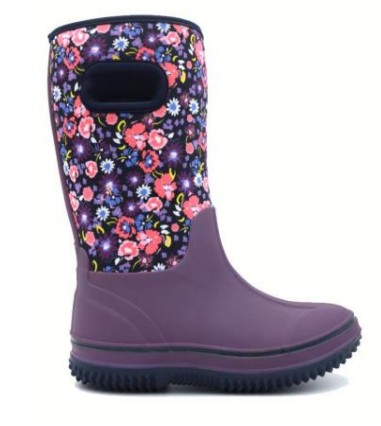
The foundation of manufacturing reliable waterproof footwear lies in polymer science. While consumers often use the term rubber broadly, factories utilize highly specific chemical blends tailored to the boot's intended purpose. Selecting the right compound is the most critical decision a brand makes during product development.
Traditionally, vulcanized natural rubber has been the gold standard for premium work footwear. The vulcanization process, a method heating rubber with sulfur to form cross-links, creates a material with exceptional flexibility, tear resistance, and cold-weather performance. It remains pliable even in freezing marine environments. However, traditional rubber can be highly vulnerable to certain agricultural acids if not properly treated with specific chemical inhibitors.
Polyvinyl Chloride, commonly known as PVC, is a synthetic plastic polymer. It is highly cost-effective and naturally resists many industrial chemicals. This makes it a common choice for entry-level farm footwear. PVC is manufactured via injection molding, allowing for rapid high-volume production. Yet, PVC tends to stiffen in extreme cold, rendering it less ideal for winter commercial fishing.
Thermoplastic Elastomer has revolutionized the footwear sector over the past decade. It is an advanced, eco-friendly polymer that bridges the performance gap between vulcanized rubber and PVC. It offers the high elasticity and low-temperature flexibility of natural rubber while maintaining the chemical resistance and lightweight properties of plastic.
For B2B brands looking to innovate, this material allows for highly efficient injection molding processes. It significantly reduces production times and material waste. Advanced manufacturers are increasingly utilizing this material to produce high-performance TPE boots that meet the rigorous demands of both agricultural and marine environments. For instance, modern TPE formulations can achieve a Shore A hardness of 55 to 60, ensuring they remain pliable at minus 20 degrees Celsius without the heavy weight associated with traditional rubber.
Manufacturing top-tier farm footwear requires strict adherence to industrial safety standards. Factories must engineer these products to serve as protective armor against both chemical and mechanical hazards found on modern farms.
To survive the barnyard, the base polymer blend must be chemically tweaked. Chemists add specific stabilizers and anti-degradants to the rubber or TPE mix to prevent molecular breakdown when exposed to ammonia, manure, and pesticides. If a boot lacks these additives, the material will quickly undergo dry rot. This leads to microscopic cracks that eventually compromise the waterproof integrity. Buyers must specify required chemical resistance levels during the prototyping phase to ensure the final agricultural boots meet strict industry standards.
Farms operate heavy machinery, including combine harvesters and skid steers. Farm footwear often requires built-in mechanical protection. Manufacturers integrate reinforced safety toes, typically made of steel or lightweight composite materials, into the toe box during the molding process. These must meet impact and compression standards like ASTM F2413. Puncture-resistant midsoles, often Kevlar or flexible steel plates, are embedded into the sole unit to protect workers from stepping on rusty nails, barbed wire, or sharp tools.
The outsole geometry of a farm boot is highly distinct. Engineers utilize deep, wide-lugged treads designed specifically for loose dirt, mud, and uneven field terrain. The mechanical secret lies in the spacing of these cleats. The lugs are positioned far enough apart so that as the boot flexes during walking, the mud is naturally pushed out of the grooves. This self-cleaning tread design prevents heavy mud buildup, which can add unnecessary weight and cause severe leg fatigue over a long shift.
When shifting focus to the marine sector, the manufacturing processes must adapt entirely. The priority moves to traction on smooth, wet surfaces and resistance to ocean-specific corrosive elements.
The most critical feature of marine footwear is its outsole. Unlike the deep cleats used in farming, these boots feature flat soles with minimal tread depth. Instead of lugs, factories employ a technique called siping. Siping involves cutting microscopic, razor-thin slits into the rubber outsole. When pressure is applied as the user steps down, these sipes expand to channel water, blood, and oil away from the sole. This maintains direct rubber-to-deck contact. Micro-tread engineering is absolutely crucial for preventing catastrophic slips on wet fiberglass.
Fish oils and fats are highly destructive to standard polymers. They can cause untreated rubber to swell, soften, and eventually disintegrate into a sticky mess. Constant exposure to saltwater accelerates the aging process. To combat this, factories incorporate specialized chemical stabilizers and oil-resistant nitrile blends into the rubber formulation. These additives ensure the footwear maintains its structural integrity and waterproof seal even after months of daily exposure to marine environments. High-quality fishing boots rely heavily on these advanced nitrile formulations.
Commercial fishing vessels and private yachts often feature expensive, lightly colored decks. It is a strict industry requirement that marine footwear utilizes non-marking outsoles. During compounding, manufacturers replace traditional carbon black, which gives rubber its durability but leaves severe scuff marks, with silica-based compounds. This allows the production of durable, high-friction outsoles, often in gum, white, or light blue colors, that will not damage boat surfaces.
The landscape of OEM manufacturing for industrial footwear is undergoing a rapid transformation. Market data indicates a decisive shift toward bio-based polymers and highly recyclable thermoplastic elastomers. As global environmental regulations tighten, brands are aggressively phasing out traditional PVC due to its heavy phthalate content. They are opting instead for greener injection-molded alternatives that do not sacrifice chemical resistance.
Automation is reshaping the factory floor. Advanced robotics in injection molding are reducing human error, ensuring absolute consistency in wall thickness and waterproof integrity. The industry is seeing a massive surge in demand for lightweight safety components. Heavy steel shanks and toe caps are rapidly being replaced by carbon nanotube structures and advanced fiberglass composites. These innovations drastically reduce the overall weight of the boot, directly addressing the core issue of musculoskeletal fatigue for workers enduring 14-hour shifts.
Both farming and fishing expose workers to severe weather, but the thermal dynamics and moisture management requirements for each industry differ significantly. Understanding how factories engineer climate control is essential for specifying product lines that meet end-user expectations.
Commercial fishing frequently occurs in sub-zero environments. Exposure to freezing ocean spray and conductive heat loss through cold boat decks present severe occupational hazards. To mitigate these risks, manufacturing premium marine footwear relies heavily on specialized thermal barriers.
A standard approach involves the integration of Neoprene. Factories typically utilize a vulcanization process to bond thick Neoprene uppers, ranging from 5mm to 7mm in thickness, directly to the lower waterproof shell. This seamless bonding prevents water ingress while trapping a layer of insulating air close to the wearer’s body. For extreme arctic conditions, manufacturers can add reflective metallic films or fleece linings, stitched and sealed internally to reflect radiant body heat back to the foot.
Agricultural work involves highly active, continuous walking. While thermal insulation is necessary for winter farming, the primary climate control challenge is internal moisture management. Excessive sweat accumulation can lead to friction blisters, fungal infections, and accelerated degradation of the boot’s interior.
To address this, manufacturers focus on the moisture vapor transmission rate. Instead of heavy thermal barriers, factories often incorporate 3D air-mesh linings. During assembly, these hydrophobic mesh materials are bonded to the interior walls. The geometric structure of the 3D mesh creates micro-channels that allow air to circulate with each step. This effectively pumps humid air out of the boot shaft. Antimicrobial treatments are frequently applied during the finishing phase to neutralize odor-causing bacteria.
For brand owners, wholesalers, and distributors, standardizing the procurement process is a primary driver for partnering with an OEM. The B2B supply chain requires products that not only perform to industrial standards but also align with specific brand identities and cost constraints.
Industrial footwear is rarely customized purely for aesthetics. Color-coding serves distinct functional and regulatory purposes. In manufacturing, color masterbatching is utilized during the polymer compounding phase to achieve specific hues without compromising structural integrity.
For food processing and marine environments, factories predominantly produce white boots, making it immediately visible if they have been properly sanitized. Farm boots are typically molded in dark green, brown, or black to effectively mask mud and manure stains. Brands can invest in custom steel or aluminum molds to feature embossed 3D logos on the boot shaft. OEMs can also engineer specific sizing runs, including expanded calf widths or specialized ergonomic footbeds, catering to regional demographic data.
A critical aspect of B2B procurement is managing the total cost of ownership and achieving a viable return on investment. Manufacturers assist brands in balancing material costs against required performance metrics. For entry-level markets, PVC injection molding is highly efficient and cost-effective. For premium product lines requiring enhanced durability and extreme temperature resistance, factories will transition to advanced thermoplastic blends. By analyzing the target demographic price point, the OEM can adjust polymer ratios, lining materials, and safety hardware to engineer rubber work boots that meet both performance standards and profit margin requirements.
The operational success of an industrial footwear brand is intrinsically linked to the capabilities and reliability of its manufacturing partner. Buyers must evaluate potential factories not merely as suppliers, but as technical engineering collaborators.
Objective quality assurance is the foundation of reliable manufacturing. A reputable factory operates strictly within the parameters of international testing standards. When evaluating a partner, request documentation of their internal testing laboratory capabilities. Key protocols include slip-resistance testing, flex cracking resistance in sub-zero temperatures, and impact testing for safety toes to ensure compliance with ASTM or EN ISO standards.
Scalability is another crucial factor. As a brand grows, it may need to expand its product line from basic farm boots to specialized commercial marine footwear. An OEM with a narrow production focus will force the brand to fragment its supply chain across multiple factories, increasing logistical complexity. A factory that demonstrates proficiency in vulcanized rubber, PVC injection molding, TPE extrusion, and Neoprene bonding provides a consolidated manufacturing hub. This ensures consistent sizing and uniform quality control across the entire portfolio.
Manufacturing Variable | Agricultural Boots | Commercial Fishing Boots |
|---|---|---|
Primary Polymer Additives | Ammonia and acid degradation inhibitors | Saltwater and fish-oil resistant stabilizers |
Outsole Geometry | Deep, widely spaced cleats for self-cleaning mud traction | Flat, micro-siped channels for maximum surface contact |
Safety Hardware | Heavy-duty steel or composite toes, puncture-resistant midsoles | Lightweight construction, flexible soft toe boxes |
Internal Lining | 3D air-mesh for breathability and sweat wicking | Bonded Neoprene or thermal fleece for extreme cold |
Color Compounding | Dark green, brown, or black for stain masking | White or high-visibility colors for hygiene tracking |
While agricultural and marine footwear may look somewhat similar on a retail shelf, their OEM manufacturing processes are fundamentally different. Tread geometry, chemical resistance, and internal climate control dictate their specific industrial applications. B2B buyers must partner with experienced manufacturers capable of navigating these complex material sciences. Selecting the right polymer blends and safety features ensures durability, compliance, and ultimate end-user satisfaction. To find the exact specifications that match your industry requirements, explore the full catalog at GW Boots and elevate your brand's protective footwear line today.
Generally, no. While both types provide waterproof protection, their engineering is fundamentally different. Farm boots are manufactured with deep, aggressive treads designed to grip loose soil. On a wet, fiberglass boat deck, these deep cleats reduce surface contact and drastically increase the risk of slipping. Farm boots lack the specific chemical stabilizers required to prevent the rubber from degrading when continuously exposed to corrosive saltwater and fish fats.
The optimal materials depend on the specific marine environment, but advanced Thermoplastic Elastomers and vulcanized natural rubber blends mixed with nitrile are considered industry standards. These materials offer superior flexibility in freezing temperatures and resist degradation from marine oils. They also provide the necessary elasticity to accommodate micro-siped outsoles, which are critical for maintaining traction on rocking, wet surfaces.
Farms expose footwear to a severe combination of mechanical and chemical stressors. Standard waterproof footwear will rapidly degrade when exposed to the ammonia in animal waste, concentrated fertilizers, and harsh pesticides. Specialized farm boots are formulated with specific polymer additives to resist these corrosive elements while incorporating heavy-duty safety features, such as puncture-resistant midsoles, to protect workers against heavy machinery.
Yes. A reputable OEM possesses the tooling and engineering capabilities to customize safety features according to a brand's specific market requirements. This includes integrating steel or non-metallic composite toe caps, inserting Kevlar puncture-resistant midsole plates, and modifying the outsole compound to meet specific electrical hazard or static dissipative standards.
Testing protocols are tailored to the specific hazards of each environment. Farm footwear undergoes rigorous puncture resistance tests and chemical immersion tests focusing on agricultural acids and ammonia. Marine footwear testing heavily emphasizes slip resistance on wet, oily, and smooth surfaces, utilizing specialized tribometers to measure the exact coefficient of friction on simulated boat decks.
Lifespan depends heavily on usage intensity and material quality. In demanding commercial environments, a standard PVC boot might last six months before stiffening or cracking. Premium vulcanized rubber or advanced TPE boots engineered with specific chemical inhibitors can last well over a year under similar daily abuse. Proper maintenance, such as washing off corrosive chemicals and fish oils after shifts, significantly extends the structural integrity of the boot.


