

Views: 0 Author: Site Editor Publish Time: 2026-09-15 Origin: Site


The winter footwear market overflows today with proprietary technologies and heavily exaggerated temperature ratings. This saturation creates serious buying challenges for consumers. Choosing the wrong pair of boots routinely leads to freezing feet. It compromises traction on slick ice. It also forces you to overpay for extreme-weather features you simply do not need. We created this objective, criteria-based framework to help you cut through the unregulated marketing noise. You will learn how to evaluate footwear based on actual thermal efficiency, proven moisture management, and precise biomechanical fit. By understanding exactly what makes a boot work, you can match specific architectural features to your real-world use cases. Ignore the misleading "-40°F" claims. Focus instead on the structural anatomy dictating warmth and safety.
Match construction to context: City commuting requires slush-proof rubber shells, while active winter hiking demands breathable, lightweight insulation.
Temperature ratings are subjective: Look for tangible insulation weights (e.g., 200g vs. 400g) rather than brand-claimed temperature minimums, which lack industry-standardized testing.
Waterproof vs. Water-Resistant: True waterproof snow boots require seam-sealed construction and gusseted tongues, not just DWR (Durable Water Repellent) coatings.
Fit dictates warmth: Overly tight boots compress insulation and restrict blood flow; sizing must accommodate winter-weight socks.
You must establish your primary usage environment before analyzing specific materials. Footwear engineered for a high-intensity mountain climb fails miserably during a static ice-fishing trip. We categorize solutions based on output levels and environmental hazards.
City winters demand protection from slush, road salt, and shallow puddles. Urban commuters prioritize aesthetic versatility and easy on/off capabilities. You rarely need maximum thermal retention because you constantly move between heated buildings and transit vehicles. Heavy insulation causes rapid overheating in these scenarios.
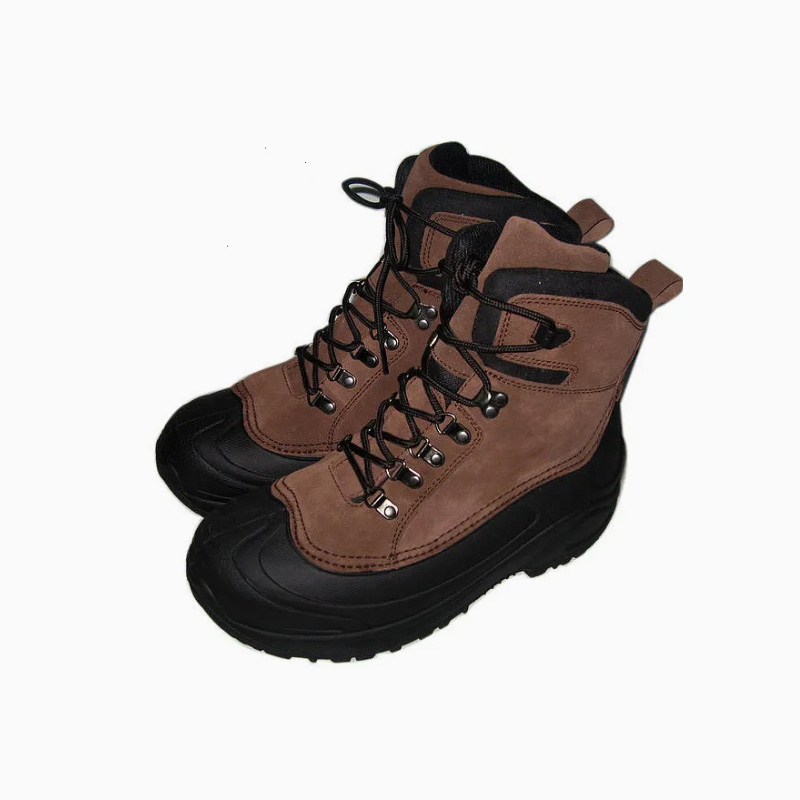
For daily wear, experts recommend the classic "Pac boot" style. These feature waterproof rubber lower shells paired with flexible leather or nylon uppers. When selecting snow boots for city environments, aim for moderate insulation levels around 100g to 200g. This architecture repels curb-side slush perfectly. It also offers enough flexibility for driving or walking on cleared sidewalks.
Active trail usage completely shifts the required footwear criteria. You need profound ankle articulation, aggressive terrain traction, and high breathability. Sweating inside a heavily insulated rubber shell creates internal condensation. This moisture quickly freezes once you stop moving, leading to dangerous cold exposure.
Choose silhouettes mimicking traditional hiking boots. They utilize advanced breathable membranes like Gore-Tex rather than solid rubber lowers. The midsoles must remain stiff to support your foot across uneven rocks and frozen roots. Finding reliable men snow boots for outdoor labor often requires balancing this breathability against necessary toe protection. Limit insulation to 200g to prevent sweat accumulation during high cardiovascular output.
Low-activity scenarios require maximum thermal retention. Standing on a frozen lake generates zero body heat to warm the boot's interior. You must rely entirely on the footwear's passive insulation capabilities to prevent frostbite.
These environments demand heavyweight insulation exceeding 400g. Many extreme-cold options use removable felt liners. These liners trap massive amounts of air and dry quickly near a fire. You also need remarkably thick outsoles. Thick rubber creates a physical thermal break, distancing your foot from the conductive freezing ground. The obvious trade-off involves weight and agility. These boots feel incredibly heavy and severely limit ankle mobility.
Brands frequently market boots using extreme temperature ratings. You must evaluate these core feature-to-outcome metrics skeptically. Exposing marketing fluff protects your wallet and your toes.
You see tags claiming "-25°F" routinely. This metric carries a massive risk. Brands calculate these temperature ratings assuming a high level of physical activity. They rely on the wearer generating significant internal body heat. The industry currently lacks regulated laboratory standards for testing boot warmth. One brand's -20°F rating often equals another brand's 0°F rating.
Ignore the temperature claims on the box. Evaluate synthetic insulation strictly by its physical weight. Manufacturers measure this material in grams per square meter. Gram weight provides an actionable, objective metric you can compare across different brands.
Understanding gram weights helps you match thermal retention to your activity level. Let us break down the standard industry tiers.
Insulation Weight Comparison Chart
Gram Weight | Thermal Profile | Ideal Scenarios |
|---|---|---|
100g – 200g | Lightweight, highly breathable | High-output activities, active hiking, mild commutes |
400g | Mid-to-heavyweight, highly heat retentive | Prolonged exposure in freezing temperatures, low activity |
600g+ | Maximum bulk, extreme heat trapping | Static extreme cold, snowmobiling, Arctic environments |
Most consumers over-insulate. A 200g boot covers 80% of typical winter applications perfectly. The market for ladies snow boots heavily emphasizes slim profiles, making 200g synthetics highly desirable for maintaining sleek aesthetics without sacrificing warmth.
We must evaluate proprietary brand tech against established synthetics. Established materials like Thinsulate and PrimaLoft dominate the market for a reason. Their microscopic fibers trap body heat efficiently while resisting moisture absorption. If the boot floods, synthetic fibers still retain some warming capabilities.
Brands increasingly use reflective linings (like aluminum dots). These bounce radiated body heat back toward the foot. They work well but require the user to generate heat first. Alternatively, natural materials like shearling and wool provide exceptional comfort. Wool offers natural odor control and fantastic insulation. However, wool suffers from significantly slower drying times compared to advanced synthetics. If you soak a shearling-lined boot, it might take days to dry completely.
Waterproofing represents the most critical structural evaluation dimension. Once moisture breaches the exterior, insulation compresses and loses its ability to trap heat. You must understand common failure points.
A boot only achieves true waterproof status if the factory tapes or seals its seams. Stitching creates thousands of tiny holes in the upper material. Water easily finds these pathways. Seam-sealing involves applying waterproof tape or liquid rubber over every interior stitch line.
Beware of footwear relying solely on DWR (Durable Water Repellent) coatings. DWR forces water to bead up and roll off the fabric. However, DWR coatings inevitably wear off due to abrasion and dirt. Physical waterproof barriers do not degrade like chemical surface coatings. Always check the product specifications for explicit "seam-sealed" terminology.
Designers utilize two primary methods to block moisture. You must choose based on your perspiration levels.
Waterproof Membranes: Materials like Gore-Tex or proprietary brand equivalents feature microscopic pores. These pores block liquid water molecules from entering but allow vaporized sweat molecules to escape. They rank as the best option for breathability during active use.
Rubber Shells: Pac boots utilize solid rubber lowers. Rubber provides a 100% impenetrable barrier to puddles and slush. It requires zero maintenance. The major flaw is zero breathability. Sweat cannot escape a rubber shell, which often causes internal moisture buildup during active use.
Consumers frequently overlook the tongue construction. This oversight serves as the most common moisture failure point. Standard shoe tongues detach from the upper along the sides. If you step into a deep puddle, water instantly floods through the lace eyelets and around the unattached tongue.
Winter footwear requires a gusseted tongue. Manufacturers sew extra webbing connecting the sides of the tongue directly to the upper. This creates a continuous bridge of waterproof material behind the laces. If the tongue is not gusseted, snow and water will penetrate the laces. This renders your waterproof lower shell entirely useless.
Traction dictates your safety on ice. We evaluate outsoles based on scalability, durability, and specific performance features. A standard hiking boot sole fails dangerously in freezing temperatures.
Standard carbon rubber hardens rapidly as temperatures drop. The outsole turns into a rigid plastic puck. This hardened surface slides uncontrollably across slick ice. Winter requires specialized chemistry.
Look for winter-specific rubber compounds. Technologies like Vibram Arctic Grip or similar brand equivalents infuse the rubber with fiberglass fragments or silica. These specialized compounds remain pliable in sub-zero environments. They conform to microscopic imperfections on the ice surface. The embedded fiberglass acts like tiny abrasive teeth, biting into wet ice to prevent catastrophic slips.
Tread geometry dictates how a boot handles different types of winter precipitation. You need to match the lug pattern to your primary terrain.
Deep, widely spaced lugs (5mm+): These excel in deep, loose powder. Wide spacing allows the sole to shed packed snow naturally as you walk. If lugs sit too close together, snow packs between them, creating a slick surface.
Broad, flat surface areas with micro-siping: Siping involves cutting tiny razor slits into the rubber blocks. These slits open up as you step, creating hundreds of gripping edges. This geometry works best for gripping sheer ice and wet urban pavements.
Consider the structural trade-off. Aggressive, soft-rubber hiking treads wear down remarkably quickly if used purely on abrasive city concrete. Commuters should seek denser rubber compounds with lower-profile lugs to ensure longevity.
Biomechanical fit heavily influences thermal efficiency. Even the most technologically advanced footwear fails if sized incorrectly. We must cover implementation realities, sizing risks, and daily usability.
Consumers frequently buy their standard street-shoe size. This decision introduces massive thermal risks. Buying true-to-size often leads to an overly tight fit once you put on thick Merino wool socks. A tight fit physically compresses the boot's synthetic insulation, squeezing out the trapped air necessary for warmth.
More dangerously, tight footwear restricts capillary blood flow in your extremities. Your body circulates warm blood to your toes to fight off the cold. Constriction stops this flow, resulting in severely colder feet regardless of insulation weight. Follow the golden rule of thumb: Size up by a half-size for all winter-specific footwear. Fitting kids snow boots poses a unique challenge. Always verify a thumb-width of space remains at the toe box to accommodate thicker socks and rapid foot growth.
Tying knots with thick insulated gloves frustrates everyone. Evaluate the closure system based on your dexterity needs and repair capabilities.
Traditional Laces: These provide maximum micro-adjustability across the instep. They cost pennies to replace if snapped. However, they remain exceptionally difficult to tie while wearing thick winter gloves.
BOA / Speed Lacing Systems: These use a mechanical dial and steel cables. They offer fantastic glove-friendly operation. You simply spin a dial to tighten the entire upper. The drawback involves field repairs. If a cable snaps on a remote trail, you cannot easily rig a fix.
Slip-On / Side-Zip: Commuters love these for their high convenience. You can kick them off quickly at the front door. They typically provide lower structural support. Avoid zippers for aggressive, uneven terrain hiking.
You can navigate the winter footwear market successfully by prioritizing objective architectural features over flashy marketing claims. Apply strict shortlisting logic before purchasing. Do not over-buy based on fear of the cold. An 800g extreme-weather boot acts as a clumsy, sweaty liability during a standard urban commute.
Take these actionable next steps. First, determine your primary use case precisely. Differentiate between active hiking and static standing. Second, select the appropriate insulation weight. A 200g rating generally provides the most versatile solution for daily use. Finally, physically inspect the construction. Verify the presence of seam-sealed waterproofing and a fully gusseted tongue before finalizing any purchase. Proper evaluation guarantees dry, warm, and secure movement through any winter environment.
A: No. Snow boots specifically prioritize heavy waterproofing, aggressive traction, and maximum warmth over aesthetics. They typically feature higher shafts and rubber lower shells to block deep drifts. Winter boots encompass a broader category. They often emphasize urban styling and utilize leather or suede uppers. Winter boots might feature lighter insulation and lack seam-sealed waterproofing, making them better suited for dry, cold city walks rather than trudging through deep slush.
A: A premium pair should last between three to five seasons under moderate usage. Durability largely depends on outsole abrasion and insulation compression. Walking exclusively on abrasive concrete wears down soft winter rubber much faster than walking on packed trails. Additionally, heavy internal sweating and constant use gradually compress the synthetic insulation fibers. Once the insulation fully flattens out, the boots permanently lose their original thermal retention capabilities.
A: You can, but you must choose the right architecture. Heavy, rigid pac boots cause severe foot fatigue over long distances. If you plan to walk miles daily, seek designs incorporating rocker-shaped soles and thick EVA foam midsoles. These features mimic athletic running shoes, promoting a natural walking gait. You must also select lower insulation weights (100g-200g) to prevent massive sweat accumulation during extended periods of walking.


