

Views: 0 Author: Site Editor Publish Time: 2026-09-30 Origin: Site


Stocking substandard outdoor footwear carries major financial risks for retail programs. High return rates and brand reputation damage often trace back to a single failure point. Compromised waterproof membranes destroy consumer trust quickly. Retail buyers constantly face a difficult sourcing challenge today. You must bridge the gap between aggressive consumer marketing claims, like "100% waterproof," and actual manufacturing realities. If a boot leaks in the field, the customer blames your brand. They rarely blame the overseas factory.
This article gives category managers and retail buyers an evidence-based framework for sourcing footwear. You will learn how to evaluate technical specifications critically. We will show you how to align inventory with local terrain demands. Finally, you will discover the key steps to vetting a reliable supplier. This knowledge protects your margins. It also helps build lasting consumer loyalty.
Success in outdoor footwear retail requires aligning technical boot construction (membranes, outsoles) with specific consumer use-cases (e.g., active vs. sedentary hunting).
Breathability and waterproofing are inherently at odds; sourcing decisions must balance these based on target climates.
Expanding into niche demographics (women's specific lasts, hiking-hunting crossovers) creates distinct competitive advantages.
Evaluating an outdoor hunting boots wholesale partner goes beyond unit price, requiring rigorous prototype field testing and supply chain transparency.
Retail buyers must understand the honest truth about waterproof membranes. Breathability and waterproofing inherently conflict. A membrane blocks external water droplets. However, it must also let internal water vapor escape. Functional limitations exist in all membrane technologies. B2B buyers must actively avoid suppliers making unverifiable "zero-sweat" claims. Consumers will sweat during strenuous climbs. Managing expectations prevents unnecessary product returns.
Insulation ratings dictate the boot's optimal use case. Active hunters rely on "spot and stalk" tactics. These consumers need uninsulated or lightly insulated boots. You should target 200g to 400g of insulation for active profiles. Sedentary hunters spend hours in treestands. Stand hunting demands high-gram insulation. You should spec 800g to 1200g+ requirements for your winter hunting footwear programs. Stocking the wrong insulation weight for your local climate guarantees poor sales.
You need a reliable method to map membrane breathability ratings against expected seasonal inventory cycles. We created a practical decision matrix. It helps you align factory specifications with retail purchasing windows.
Seasonal Footwear Decision Matrix
Hunting Season | Activity Level | Insulation Target | Membrane Priority |
|---|---|---|---|
Early Season (Warm) | High (Spot & Stalk) | 0g - 200g | High Breathability, Moderate Water Resistance |
Mid Season (Cool) | Mixed Activity | 400g - 600g | Balanced Breathability and Waterproofing |
Late Season (Cold) | Low (Stand Hunting) | 800g - 1200g+ | Maximum Waterproofing, Low Breathability |
Best Practices: Always ask the factory for dynamic breathability test results. Ensure the membrane performs under physical flex, not just static conditions.
Common Mistakes: Over-insulating early-season boots is a frequent error. This causes excessive foot sweat. The sweat cools rapidly, making the hunter feel cold despite the thick insulation.
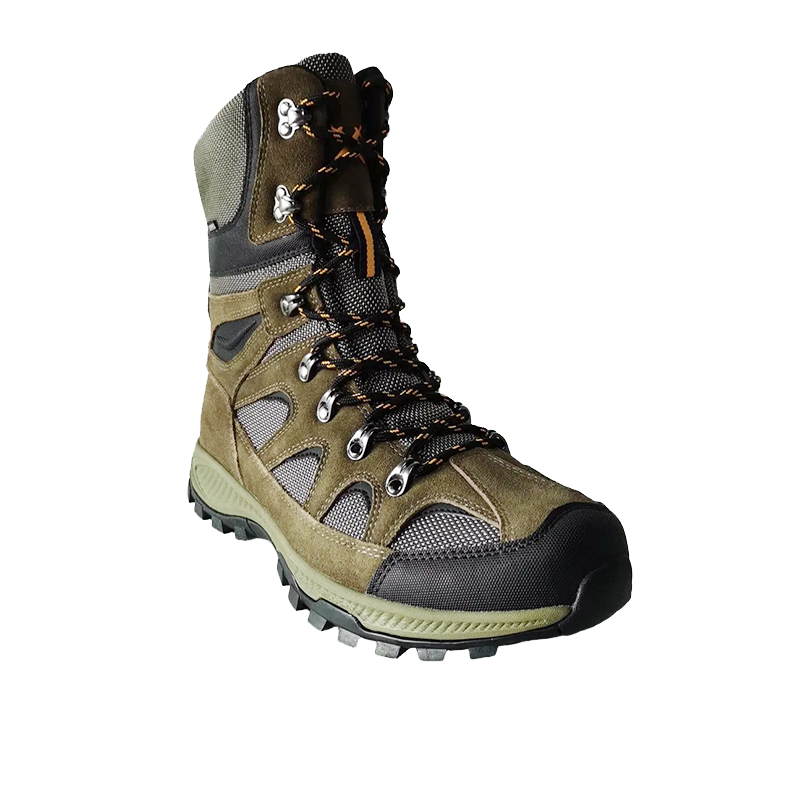
High retail conversions depend on visible technical features. Upper materials and membrane integration represent your first checkpoint. You must evaluate full-grain leather against synthetic textiles like Cordura or high-denier nylon. Full-grain leather offers superior durability and natural water resistance. Synthetics provide lighter weight and faster break-in periods. You must also inspect how the factory seals the waterproof booty. Taped seams work well for moderate use. Fluid-applied polyurethane seals offer better long-term reliability in harsh conditions.
Outsole engineering dramatically affects field performance. You cannot compromise on traction. Specifying a deep-lug rubber outsole hunting boots design is strictly non-negotiable. Deep lugs clear mud efficiently. They bite into loose scree and wet grass. Proper rubber compounding also ensures longevity across multiple hunting seasons.
Ankle support and boot height heavily influence buying decisions. You must justify shelf-space allocations for different heights. Offering 8-inch to 10-inch high top waterproof boots prevents water ingress during deep stream crossings. Taller shafts also provide critical load-bearing stability. Hunters often carry heavy packs full of meat over uneven terrain. Stiff ankle support prevents serious backcountry injuries.
Best Practices: Request cross-section samples of the boot. Visualizing the internal membrane layers helps buyers understand construction quality.
Common Mistakes: Ignoring the midsole composition. EVA midsoles degrade faster under heavy loads. Polyurethane (PU) midsoles hold up better for heavy pack-outs.
Savvy retail programs look beyond traditional demographics. The crossover market presents massive revenue opportunities. Capitalizing on the "hiking boots for hunting" trend requires specific sourcing strategies. You should source lightweight, athletic-profile boots. These appeal to early-season bowhunters and mountain hunters. They want the agility of a trail runner combined with the durability of a hunting boot.
You must clearly distinguish between field and forest applications. Agricultural and work crossover boots typically feature slip-on rubber or neoprene designs. They excel in muddy fields and shallow swamps. Conversely, structured mountain boots dominate steep, rocky forests. Categorizing these correctly in your retail space helps consumers navigate their choices.
Women's specific hunting footwear is a vital commercial necessity. Historically, brands simply sized down men's molds. This practice ignores biological differences in foot shape. You must source boots built on true female lasts. These lasts feature narrower heels and adjusted calf volumes. Proper fit reduces heel slip and prevents blisters. Serving this growing demographic creates intense brand loyalty.
Audit your current inventory for lightweight crossover models.
Separate rubber utility boots from structured mountain boots in your catalog.
Require your factory partners to utilize dedicated women's lasts for female lines.
Vetting manufacturing capabilities prevents catastrophic inventory failures. You must assess factory certifications meticulously. Look for ISO compliance and internal SATRA testing capabilities. A factory running its own SATRA water penetration tests demonstrates strong quality control. You should also evaluate their production capacity and historical defect rates. A competent waterproof hunting boots supplier will share their defect data transparently.
Supply chain transparency matters more than ever. You need to trace the origin of raw materials. Ask where they source their leather hides. Identify their specific membrane suppliers. Confirm the origin of their rubber compounds. Knowing these details protects your supply chain from unexpected global disruptions. It also ensures consistent quality batch after batch.
Scalability and lead times dictate your cash flow. Structuring Minimum Order Quantities (MOQs) properly reduces inventory risk. You must align production schedules with fall and winter retail purchasing windows. Late deliveries mean missing peak hunting season. Missed seasons result in massive profit losses.
Best Practices: Conduct a virtual or in-person factory audit. Inspect their seam-sealing machinery specifically.
Common Mistakes: Chasing the lowest unit price without verifying the origin of the waterproof membrane. Cheap membranes delaminate quickly.
Many retailers struggle to choose between white label and private label paths. Clarifying these operational differences saves time and capital. White label involves buying an existing design and adding your logo. It requires lower minimums. Private label involves creating a unique boot from scratch. Upfront tooling costs for private label outdoor footwear can be significant. You pay for custom outsole molds and dedicated lasts. However, it offers superior brand differentiation.
Prototyping and iteration require patience. The timeline for developing custom lasts often takes months. Selecting hardware, like rust-proof eyelets and durable laces, requires careful testing. Finalizing branding placements on the upper ensures retail shelf appeal. You must build ample time into your launch calendar for these revisions.
IP and compliance present significant legal hurdles. You must ensure your chosen waterproof hunting shoes manufacturer complies with strict chemical restrictions. European and North American markets heavily regulate PFAS chemicals in Durable Water Repellent (DWR) coatings. REACH compliance is mandatory for EU sales. Failing compliance audits results in seized shipments and heavy fines.
Define who owns the rights to custom tooling molds in your contract.
Establish a strict 3-round limit for prototype iterations to prevent delays.
Demand chemical compliance certificates before approving mass production.
Relying solely on factory promises invites disaster. You must enforce rigorous lab testing standards. Request dynamic flex testing reports. Verify centrifugal water penetration test results from the factory lab. Independent verification proves the membrane can withstand repetitive motion. Reputable outdoor hunting boots wholesale partners expect and welcome these standard QA requests.
Prototype field trials remain absolutely mandatory. Lab tests do not replicate abrasive brush or freezing mud perfectly. Implement real-world buyer testing programs. Force prototypes through submersion tests in moving streams. Conduct mud-clearing walks to test the lug spacing. Evaluate flex-point durability after fifty miles of hiking. You must complete these trials before signing any mass production agreements.
Warranty mitigation protects your bottom line. Establish clear defect liabilities in your vendor contract. Negotiate acceptable AQL (Acceptable Quality Limit) levels before placing a deposit. Define robust return-to-vendor (RTV) policies. If a batch suffers widespread membrane failure, the manufacturer must bear the financial burden. Clear contracts eliminate arguments later.
Best Practices: Hire an independent third-party inspection agency to check the goods before they load into the shipping container.
Common Mistakes: Approving mass production based on a single size-9 prototype. Always request size runs to check scaling issues.
Sourcing reliable waterproof boots is fundamentally an exercise in risk management and specification verification. It is never just about margin hunting. Chasing a few dollars in savings on a membrane can cost you thousands in returns. Retail programs succeed when they balance breathability, durability, and terrain demands effectively. Careful supplier vetting and strict QA protocols guarantee that success.
Your immediate next steps involve data analysis. Advise your retail buying team to audit current seasonal return data. Identify exact failure points on existing inventory. Once you isolate those weaknesses, draft updated technical spec sheets. Finally, request new prototypes from prospective manufacturing partners who meet your upgraded standards.
A: Typical industry thresholds range from 500 to 1000 pairs per colorway. Complex custom tooling heavily affects these numbers. If you require brand-new outsole molds, manufacturers often demand higher MOQs to offset their initial setup costs. White-label designs generally allow for lower minimums.
A: You should request third-party lab testing reports from reputable organizations like SATRA. Furthermore, you must conduct independent submersion tests on pre-production samples. Submerge the boots in water for 24 hours. Check for internal dampness to confirm membrane integrity before signing purchase orders.
A: Yes, many suppliers now offer PFAS-free waterproof membranes. A major regulatory shift toward environmentally friendly Durable Water Repellent (DWR) treatments is happening globally. You must verify supplier compliance with these new chemical restrictions, especially for North American and European retail markets.


