

Views: 0 Author: Site Editor Publish Time: 2026-09-28 Origin: Site


Retail demand for slip-on, Crocs-style footwear continues to surge globally. Consumers increasingly want durable, functional, and affordable options for outdoor tasks. PVC (Polyvinyl Chloride) stands out as a highly commercial material specifically tailored for gardening applications. However, sourcing this category carries distinct risks. Sub-par PVC clogs often suffer from extreme stiffness, rapid sole degradation, off-gassing odors, and ultimately, high retail return rates. Retailers must carefully navigate these pitfalls to protect their brand reputation. Our goal is to provide a clear, evidence-based evaluation framework. We will help retail buyers, distributors, and private label brands successfully separate high-quality manufacturers from low-tier commodity suppliers. You will learn how to evaluate material blends, inspect sole treads, and verify factory compliance before placing your next bulk order.
Successful sourcing of PVC garden clogs wholesale requires balancing unit cost with material pliability and sole traction.
End-users prioritize "easy clean" surfaces and lightweight construction; failing these criteria directly impacts retail sell-through rates.
Partnering with a reliable waterproof garden shoes manufacturer involves verifying injection-molding precision and compliance with international restricted substance lists (e.g., REACH).
Private label garden shoes offer higher margins, provided the supplier supports low-MOQ mold modifications and custom colorways.
Buyers must critically evaluate material choices before committing to a bulk purchase. Consumers often compare PVC directly against EVA and traditional rubber. Each material presents distinct commercial advantages and drawbacks.
First, we must view EVA and PVC through a skeptical lens. EVA is undeniably lighter. However, PVC provides vastly superior abrasion resistance. Abrasive gardening environments quickly destroy soft EVA foam. PVC also commands a significantly lower wholesale price point. This pricing advantage makes it the ideal choice for high-volume, budget-conscious retail categories.
Next, consider the comparison between rubber and PVC. Rubber boasts exceptional durability. Unfortunately, it is heavily weighted and expensive to manufacture. High shipping costs erode profit margins. PVC successfully bridges this gap. It delivers acceptable outdoor durability while maintaining favorable freight economics.
Material Comparison for Garden Footwear
Material Type | Weight Profile | Abrasion Resistance | Wholesale Price Point | Best Retail Application |
|---|---|---|---|---|
EVA Foam | Ultra-Lightweight | Low | Medium | Casual indoor/patio wear |
Traditional Rubber | Heavy | High | High | Heavy-duty farm work |
Plasticized PVC | Moderate | Medium-High | Low | Everyday garden and yard work |
The cost-to-margin ratio heavily favors PVC. Favorable wholesale pricing allows retailers exceptional flexibility regarding retail markups. You can offer aggressive promotions while sustaining profitability. However, this margin equation only works if defect rates remain below the industry standard benchmark of 2%. Sub-standard materials quickly inflate return rates.
We must operate under one transparent assumption. PVC only functions as a profitable category if the factory uses high-grade, plasticized PVC. Cheap formulations produce a stiff, uncomfortable feel. Uncomfortable shoes immediately drive negative customer reviews. You must prioritize pliable material blends over absolute lowest cost.
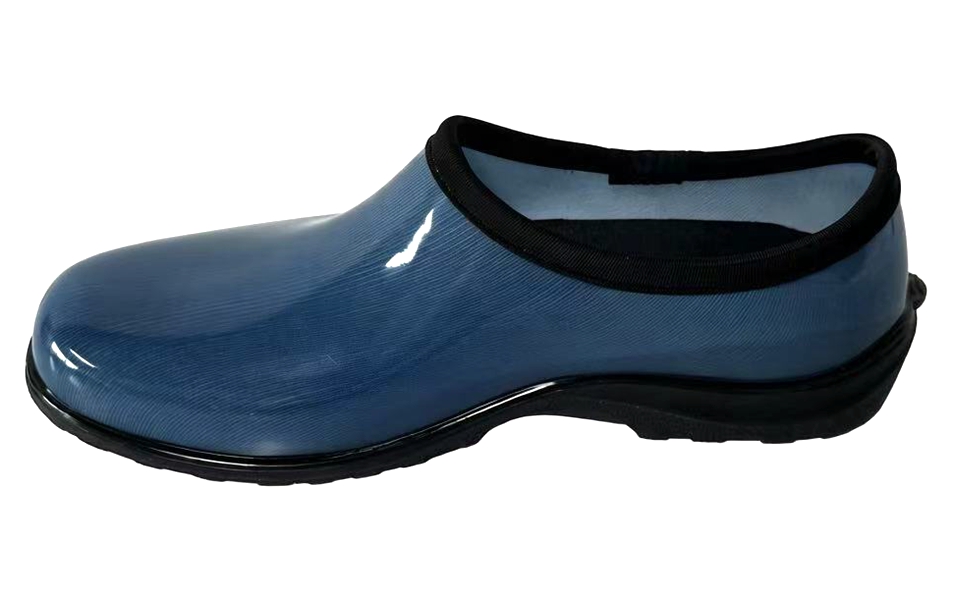
Evaluating the tread pattern is non-negotiable. Shallow treads on PVC soles become dangerously slippery in wet mud. Gardeners need aggressive grip to navigate slick grass and clay. You should specifically look for deep, multidirectional lugs on the outsole. Multidirectional lugs actively channel water and mud away from the footbed.
To mitigate safety risks, demand empirical data. You should request formal slip-resistance testing reports from your chosen gardening footwear supplier. Certified lab results protect your business from liability and guarantee product performance.
Heavy clogs directly cause severe foot fatigue. Gardeners spend hours standing or crouching. They demand comfort. A truly competent lightweight garden clogs supplier utilizes advanced manufacturing techniques. They often introduce microscopic aeration into the molding process. Alternatively, they blend high-grade plasticizers into the raw PVC resin. These methods drastically reduce overall density without sacrificing structural integrity.
End-users face a constant pain point. Gardeners deal relentlessly with wet soil, compost, and sticky clay. Footwear must shed debris quickly. Therefore, quality checks must focus on the exterior texture. You must ensure the easy clean garden clogs feature a highly smooth, non-porous upper mold. Reject designs featuring unnecessary aesthetic crevices. Dirt becomes permanently trapped inside deep grooves, frustrating the consumer and triggering returns.
You must conduct a strict failure point analysis. The structural rivet connecting the heel strap represents the most common point of failure in slip-on clogs. Cheap plastic rivets snap under minor tension. You should rigorously evaluate the hardware quality. Furthermore, test the flexibility of the strap itself. A rigid strap will crack over time, whereas a highly plasticized strap bends naturally around the wearer's heel.
The garden clog market has evolved rapidly. Modern consumers expect sophisticated footwear, even for yard work. Buyers must adapt to these shifting trends to maintain strong sales volume.
Firstly, ergonomic footbeds are now mandatory. The industry is rapidly moving beyond traditional flat insoles. Flat insoles cause arch pain during prolonged use. Buyers should exclusively look for suppliers integrating contoured arch support. Deep heel cups and textured massage nodes align perfectly with modern consumer expectations regarding daily comfort.
Secondly, we are witnessing massive aesthetic shifts. Previously, garden shoes only appeared in utility greens or basic blacks. Today, consumers treat these clogs as lifestyle accessories. Buyers must stock vibrant, retail-friendly colorways. Two-tone injection molding provides a massive competitive advantage. It allows the sole and the upper to feature contrasting colors, instantly elevating the perceived value on the retail shelf.
Finally, you must balance ventilation against waterproofing. Consumers constantly demand breathable side ports to keep feet cool. However, the primary functional demand remains a closed-toe, waterproof vamp. A solid front vamp protects toes from falling tools, wet soil, and chemical spills. The ideal design places ventilation ports strictly along the medial and lateral sides, keeping the top completely sealed.
Building brand equity requires moving beyond generic catalog items. Understanding the nuances of custom manufacturing is vital for scaling your retail operations.
You must clarify the difference between white label and private label strategies. White label involves purchasing off-the-shelf catalog designs. This path ensures a much faster time-to-market. Conversely, private label development involves creating custom molds. Custom molds demand a higher initial investment but generate substantial long-term brand equity.
When developing private label garden shoes, you should evaluate three main customization dimensions:
Logo Placement Strategies: Decide between embossed molding or pad printing. Embossed logos molded directly into the strap or upper resist fading permanently.
Custom Pantone Matching: Ensure the factory can precisely match your exact corporate brand colors using raw resin pigments.
Add-on Accessories: Design the upper holes to ensure custom charm compatibility, allowing end-users to personalize their footwear.
Buyers must acknowledge serious implementation risks. Custom molds typically require high Minimum Order Quantities (MOQs). High MOQs tie up significant capital. We strongly advise buyers to negotiate staggered production runs. You should request smaller initial batches to test retail demand safely. Once you confirm strong sell-through rates, you can comfortably commit to massive volume orders.
Selecting the right factory determines your ultimate retail success. You cannot rely on marketing brochures alone. You must implement a rigid vetting process.
Regulatory compliance protects your business from disastrous PR crises and border seizures. You must ensure the waterproof garden shoes manufacturer strictly adheres to environmental and chemical safety standards. If you sell in the European market, REACH compliance is absolute law. It ensures the PVC contains no restricted phthalates or heavy metals. For the US market, particularly California, the factory must comply with Proposition 65. Always demand verifiable, third-party lab testing reports.
You need to assess the factory's technical machinery. Specifically, check whether they use single-injection or double-injection machines. Single-injection machines produce the entire shoe using one uniform density of PVC. This limits comfort. Double-injection machines are crucial for manufacturing premium dual-density clogs. Dual-density construction allows the outer sole to be hard and durable, while the inner footbed remains soft and pliable.
Do not accept vague promises regarding quality. Demand total transparency on their defect resolution process. You must ask specific questions about their pre-shipment inspections (PSI). Do they perform these inspections based on strict AQL (Acceptable Quality Limit) standards? A reliable factory will gladly share their AQL 2.5/4.0 inspection checklists, proving they actively catch deformities before sealing the shipping cartons.
Successful procurement relies on a strict decision matrix. You must prioritize suppliers who gladly offer transparent material specifications and verifiable QC protocols. A clear track record of exporting to your specific target market demonstrates essential competence. Do not compromise on tread depth, material pliability, or chemical compliance. We strongly advise all buyers to request a comprehensive "sample pack" first. This pack should feature various material densities, allowing you to physically compare stiff versus flexible PVC compounds. Thoroughly evaluate these physical samples before initiating any bulk negotiations or requesting PVC clogs wholesale quotes. Taking these calculated steps ensures higher profit margins, lower return rates, and a resilient retail brand.
A: Realistic industry averages typically range from 1,000 to 3,000 pairs per color and style. Custom mold costs heavily dictate these numbers. Setting up machinery for a new injection mold requires significant labor and raw material purging. Factories enforce these MOQs to absorb the initial setup costs and maintain their production efficiency.
A: You must explicitly request third-party lab testing reports from reputable organizations like SGS, Intertek, or TUV. Never take a manufacturer's verbal assurance. These independent documents verify compliance with REACH or Proposition 65 standards. They confirm the total absence of harmful phthalates, lead, and other restricted chemical substances.
A: Yes, under extreme conditions. While high-grade PVC is noticeably more UV-resistant than cheap EVA foam, prolonged exposure to intense heat can cause structural deformation. You should frame this reality as a necessary warning label for end-consumers rather than a product defect. Advise customers to store their footwear in shaded areas.


