

Views: 0 Author: Site Editor Publish Time: 2026-07-23 Origin: Site


Procuring the right waterproof footwear goes beyond just keeping feet dry. Whether you outfit an industrial fleet or handle demanding agricultural work, footwear impacts daily performance. The wrong material choice leads to premature degradation. You risk severe foot fatigue, decreased worker morale, and increased replacement cycles.
Choosing between Rubber Boots and PVC requires careful balance. You must weigh upfront cost against environmental resilience. You also need to assess extreme temperature fluctuations and specific chemical exposure risks. Making a blind purchase often results in wasted budget.
This guide strips away marketing fluff. We objectively compare rubber and PVC materials. We focus on physical properties, daily industrial performance, and long-term return on investment. You will learn exactly which boot matches your specific use case. You can then make confident procurement decisions for your team.
You cannot make an informed choice without understanding the basic chemistry. How manufacturers build these items directly dictates how they perform in the field. Let us examine the fundamental differences.
Manufacturers construct these from natural tree sap (latex) or synthetic compounds. The manufacturing reality involves a complex, layered process. Workers build the footwear over a specialized mold. They then subject the entire piece to vulcanization. This involves heating the material alongside sulfur in a pressurized oven.
Vulcanization fundamentally alters the molecular structure. It creates cross-links between polymer chains. This chemical change produces a highly elastic, unified, and tear-resistant final product. The material gains structural memory. It bounces back to its original shape after severe bending. This traditional method demands highly skilled labor. It also requires more production time, which drives up the initial purchase price.
Manufacturers make PVC Boots from Polyvinyl Chloride. This is a highly versatile synthetic plastic polymer. The manufacturing reality here relies on industrial automation. Factories typically use advanced injection molding techniques. Machines heat PVC pellets into a liquid state. They inject this liquid directly into a two-part mold under immense pressure.
This process creates a single, seamless piece of footwear in minutes. Injection molding enables extremely high-volume, low-cost production. It completely eliminates bonded seams. This ensures absolute zero seam leakage. However, the resulting plastic structure possesses very different behavioral traits compared to vulcanized materials.
Evaluating Rubber Boots vs. PVC Boots demands a realistic look at workplace hazards. We break down performance across four critical operational categories below.
| Performance Metric | Rubber | PVC |
|---|---|---|
| Tear Resistance | High (Stretches under tension) | Moderate (Prone to splitting if punctured) |
| Flexibility | Excellent (Contours to movement) | Low (Rigid, maintains molded shape) |
| Cold Tolerance | Remains pliable in sub-zero temps | Stiffens and risks severe cracking |
| Chemical Resistance | Vulnerable to petrochemicals & fats | High resistance to acids, alkalis & animal fats |
Rubber exhibits high resistance to punctures and abrasions. When you snag it on a sharp branch or exposed nail, the material stretches. It absorbs the impact energy rather than tearing immediately. However, it remains vulnerable to ozone and UV degradation. If you store natural materials improperly over several years, they will slowly dry out and craze.
PVC relies on its seamless construction. This prevents any splitting at structural joints because there are no joints. However, the plastic itself is inherently less elastic. Once a sharp object punctures the surface, structural integrity drops rapidly. PVC tends to split further along the stress line during movement.
Best Practice: Always store rubber footwear inside dark, climate-controlled lockers. Avoid leaving them in direct sunlight or near heavy electric motors that produce ozone.
Rubber naturally contours to the human ankle and calf. It remains incredibly supple during repetitive motion. This flexibility drastically reduces blistering. It minimizes foot fatigue during grueling twelve-hour shifts or long-distance walking across uneven terrain. Your foot fights the material less.
PVC remains inherently rigid. It performs exceptionally well for stationary standing tasks. However, the lack of natural flex causes problems during heavy movement. The rigid collar can rub against your calf. This repetitive friction causes serious discomfort during active hiking or climbing.
Temperature dictates material behavior more than any other factor. Rubber remains highly pliable in extreme sub-zero freezing conditions. It simply will not crack under heavy winter flexion. Workers in frozen environments rely heavily on this thermal stability.
PVC is highly temperature-sensitive. It stiffens drastically in cold weather. When the plastic freezes, it loses its limited flexibility. This creates a severe cracking risk right at the natural crease points of the foot. One deep crouch in freezing temperatures can shatter the vamp entirely.
Natural rubber provides good resistance to mild acids and bases. However, it degrades surprisingly quickly when exposed to specific industrial agents. Petrochemicals, animal fats, and certain machine oils will break down the molecular bonds. The material swells, softens, and eventually dissolves.
PVC maintains excellent structural integrity against those exact hazards. It shrugs off animal fats, harsh industrial acids, and strong alkalis. This specific chemical resilience makes plastic polymers the absolute standard for commercial food processing facilities and intensive agricultural settings.
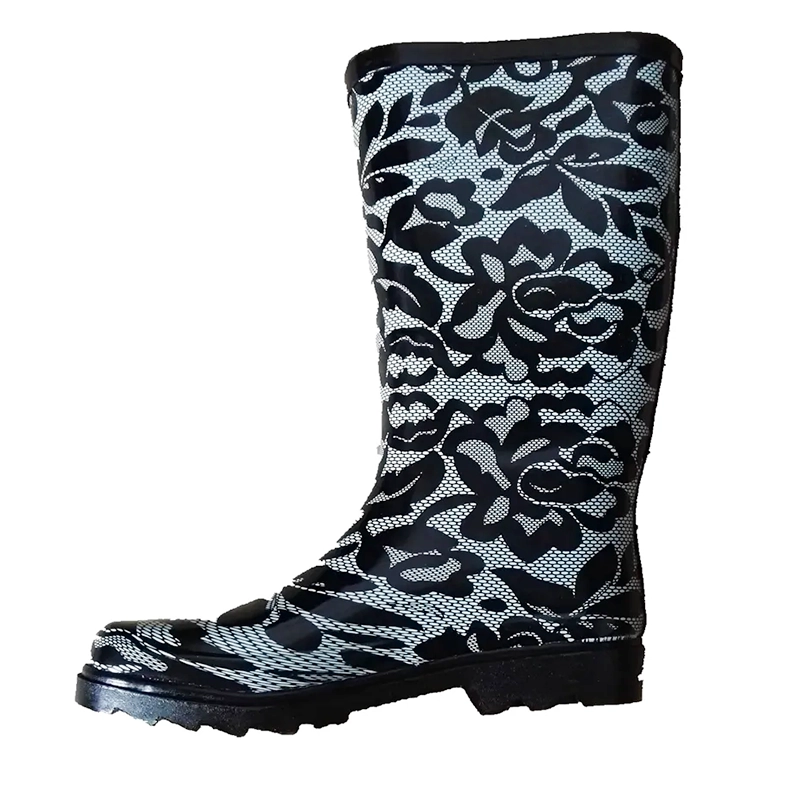
You achieve high operational success when you deploy PVC in the correct environment. The primary success criteria include a lower upfront budget, minimal long-distance walking, and high exposure to specific degrading chemicals. They provide exceptional value when matched to these exact parameters.
Ideal Applications:
Implementation Risk: Do not deploy standard PVC models in freezing winter environments. Your failure rates will spike dramatically. The resulting cracks compromise worker safety and force immediate replacement. This completely negates your initial budget savings.
Common Mistake: Facility managers often buy tight-fitting sizes. Because the plastic does not stretch, workers suffer severe chafing. Always ensure workers wear thick moisture-wicking socks and size the footwear accordingly.
You must prioritize rubber when your success criteria involve heavy physical mobility. They shine on rugged terrain and during prolonged cold weather exposure. They also meet the strict demand for a long-term operational lifespan under physical duress.
Ideal Applications:
Implementation Risk: You face a noticeably higher upfront procurement cost. Weighing your specific "cost per wear" is absolutely necessary. You must justify the initial purchase price to strict procurement teams. Furthermore, vulcanized material density means heavier weight. New users often take time to acclimate to this added heft.
Best Practice: Track your replacement cycles meticulously. An expensive pair might last three entire seasons. A cheaper alternative might fail every four months. The premium option frequently yields much higher return on investment for heavy-duty applications.
Evaluating Rubber Boots vs. PVC Boots is often incomplete without acknowledging modern composite alternatives. Material science advances rapidly. You should know where other polymers fit into the industrial landscape.
Polyurethane represents the premium tier for protective industrial footwear. Manufacturers inject PU with millions of microscopic air bubbles. This unique structure provides massive advantages. It lasts up to three times longer than standard PVC. It is also significantly lighter than traditional vulcanized products.
The trapped air bubbles make PU naturally insulating against severe cold. It resists oils and fats brilliantly. However, this superior performance commands a steep premium price. Facilities usually reserve PU for highly specialized, long-term employees who require maximum ergonomic support.
EVA essentially functions as a dense, structured foam. It feels ultralight on the foot. It provides incredible thermal insulation. People love wearing it for extended periods in deep snow.
However, EVA fundamentally lacks the dense puncture resistance of natural latex. It also completely lacks the chemical resistance of industrial plastics. Sharp nails, jagged rocks, or harsh solvents will destroy EVA rapidly. We strongly recommend reserving it strictly for light-duty winter work or casual snow clearing.
There is no universal winner in this debate. PVC firmly wins on chemical resilience against animal fats and acids. It also dominates the strict budget category. Rubber decisively wins on dynamic flexibility, extreme weather resilience, and overall physical longevity.
Your next steps require a facility-wide audit. Assess your specific environmental temperature extremes. Document exact chemical exposures on the factory floor. Calculate the daily walking distance required of your staff.
Match those collected data points directly to the material specifications outlined above. We strongly advise trialing a small batch of both styles in your active facility. Gather real worker feedback before you authorize a massive, fleet-wide rollout.
A: Yes, generally. Vulcanized rubber possesses a significantly higher density than injection-molded PVC. However, high-end rubber designs smartly balance this weight. They use advanced ergonomic support around the ankle to distribute the load evenly. You actually feel less fatigue compared to wearing a poorly fitted, lighter alternative.
A: No. PVC permanently retains its exact molded shape. Unlike leather or natural latex, it completely lacks natural give. You cannot break it in over time. Proper sizing at initial purchase is absolutely critical. Always size up if you plan to wear thick winter socks to prevent severe chafing.
A: Rubber naturally provides superior grip. It creates excellent friction on wet, oily, or icy surfaces. PVC outsoles easily become slick. Cold environments harden the plastic further, which drastically reduces your floor traction. Many industrial safety managers mandate rubber soles strictly to prevent dangerous workplace slip-and-fall incidents.
A: Yes, odor buildup is incredibly common. PVC does not breathe at all. It traps foot sweat completely inside the shoe. Odor bacteria thrive in this damp, enclosed environment. You must use high-quality moisture-wicking socks. You should also utilize electronic boot dryers daily. Fortunately, the non-porous surface makes sanitizing the interior very easy.


