

Views: 0 Author: Site Editor Publish Time: 2026-09-01 Origin: Site


Footwear brands frequently use "snow boots" and "winter boots" interchangeably. This marketing habit causes widespread buyer frustration. It leads directly to mismatched expectations and cold, wet feet. Both footwear types provide cold-weather protection. However, engineers design them for fundamentally different environments. They target different activity levels and risk exposures. You might commute through light flurries. Alternatively, you might trek through deep backcountry drifts. Choosing between snow boots and winter boots requires careful evaluation. You must assess your local climate's precipitation levels. You should consider your intended outdoor duration. Finally, you need to examine the technical specifications of the footwear itself. These critical specs include insulation weight, waterproofing methods, and outsole grip. Understanding these differences ensures your feet remain warm, dry, and comfortable.
Primary function: Winter boots prioritize warmth and everyday mobility for cold, dry, or lightly snowy days. Snow boots are specialized utility footwear built for deep snow, slush, and extended sub-zero exposure.
Waterproofing: Snow boots typically feature impenetrable, seam-sealed rubber lowers (pac boot style), while winter boots rely on water-resistant treated materials like leather or suede.
Insulation & Breathability: Snow boots often use heavy-duty or removable liners for extreme cold, whereas winter boots use moderate, built-in insulation (e.g., 200g synthetic fill) suitable for transitioning between outdoors and indoors.
Traction: Snow boots feature deeper, aggressive lugs and specialized cold-weather rubber compounds designed to prevent hardening on ice.
To make an informed purchase, we first need to define each category clearly. The footwear industry uses specific design philosophies for each boot type. Understanding these philosophies helps you match the boot to your daily routine.
The traditional winter boot serves as a general-purpose cold-weather solution. The design philosophy blends aesthetic appeal seamlessly into moderate weather protection. Brands design them specifically for urban commuting. They work perfectly for running errands. You can confidently navigate cleared sidewalks wearing them. They look appropriate in an office setting or at a restaurant.
Manufacturers usually craft winter boots from leather, suede, or durable nylon. They often feature an integrated inner lining. You will typically find fleece or synthetic faux fur inside. This provides immediate step-in comfort. The construction focuses heavily on flexibility and low weight. You can wear them all day without experiencing heavy leg fatigue.
However, winter boots have a significant limitation. They remain highly susceptible to soaking through. If you submerge them in deep puddles, water will eventually penetrate the seams. Extended exposure to heavy, wet slush will defeat most treated leathers. They prioritize breathability and style over absolute elemental protection.
In contrast, the snow boot serves as a highly technical utility solution. For this category, function dictates form. Engineers design them specifically to keep snow and moisture entirely out. They must retain maximum body heat during prolonged outdoor exposure. You need them for static activities like ice fishing. They also excel during high-exertion tasks like shoveling heavy driveways or deep-snow trekking.
The construction varies drastically from everyday winter footwear. A true snow boot typically features a high shaft to block deep drifts. It utilizes a heavily gusseted tongue to seal the lacing area. Most importantly, it features a waterproof rubber "shell" wrapping the lower foot. This pac-boot style ensures zero water penetration around the toes and sole.
The primary advantage remains clear. You get uncompromising waterproofing. You also gain superior thermal retention. When the weather turns severe, these boots act as a fortress for your feet.
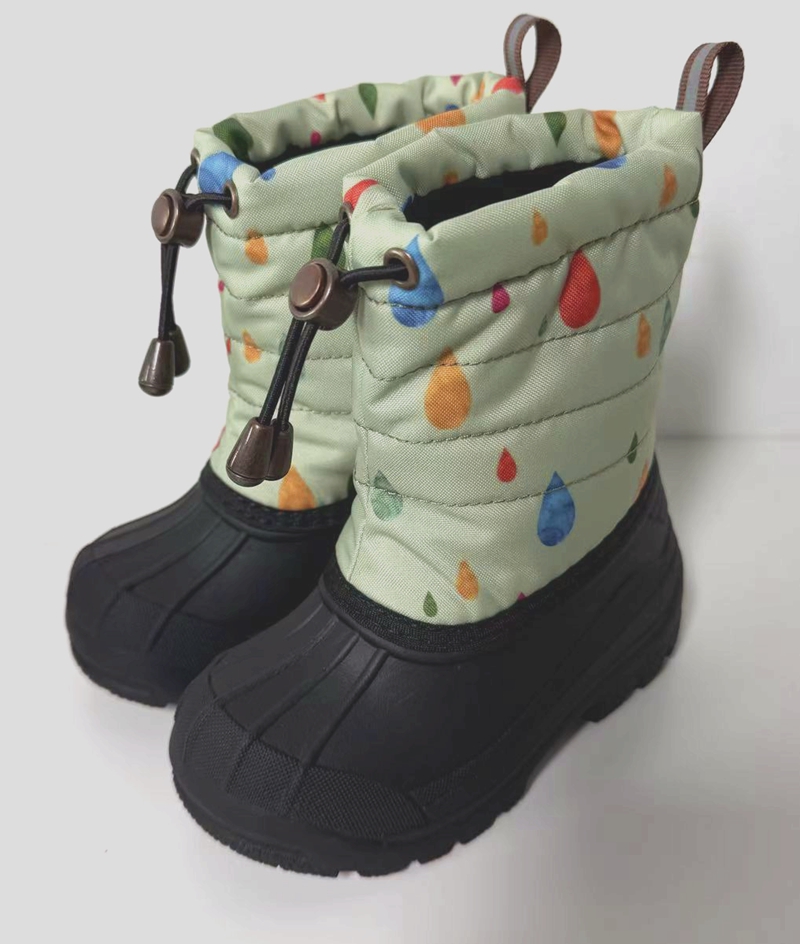
Visual differences only tell part of the story. To truly understand performance, we must analyze the technical specifications. The following dimensions separate casual footwear from serious winter gear.
Table: Core Specification Comparison
Feature Dimension | Winter Boots | Snow Boots |
|---|---|---|
Waterproofing | DWR treated leather/suede | Seam-sealed rubber shell |
Insulation Weight | Light to moderate (100g - 200g) | Heavy to extreme (400g+) |
Outsole Traction | Standard rubber lugs | Deep lugs, specialized anti-freeze rubber |
Shaft Height | Ankle to lower calf | Mid-calf to knee-high |
Many buyers confuse water resistance and waterproofing. Winter boots usually rely on a Durable Water Repellent (DWR) coating. This chemical treatment causes light snow to bead up and roll off. However, physical seam-sealed waterproofing defines a true snow boot. Manufacturers melt or tape the seams to prevent any fluid transfer.
Industry experts often refer to the "puddle test" standard. You can stand in ankle-deep freezing slush wearing snow boots indefinitely. Your feet will remain perfectly dry. If you try this wearing standard winter boots, they will eventually wet-out. Water will seep through the stitched seams or saturate the leather.
Insulation weight directly dictates your comfort level. Boot makers measure synthetic fill in grams. A 200g insulation weight works perfectly for active winter days. It keeps you warm while walking to the train station. Conversely, static extreme cold requires 400g or higher. Ice fishing or standing at a bus stop demands maximum thermal trapping.
Trustworthiness Note: You must view brand-provided temperature ratings with healthy skepticism. A boot labeled "rated for -25°F" reflects a lab-tested baseline. A copper foot mold measures heat loss in a controlled environment. Actual warmth heavily depends on your personal circulation. It depends on your activity level. It also depends entirely on your sock choice. Use these ratings for comparison, not as guaranteed comfort metrics.
Traction keeps you safe on icy mornings. Winter boots utilize standard lug patterns. These patterns handle packed snow and wet pavement adequately. Standard rubber works fine around town.
Snow boots require much more aggressive engineering. They utilize deeper, widely spaced lugs. This design sheds packed snow with every step. Furthermore, they feature softer, specialized rubber compounds. Standard rubber freezes stiff in sub-zero temperatures. It becomes slick, much like a summer car tire. Specialized cold-weather rubber retains its flexibility. This flexibility allows the microscopic edges to grip sheer ice.
Shaft height plays a crucial role in elemental protection. Ankle-high winter boots look stylish. However, they allow snow to easily spill over the collar. A single misstep into a deep drift ruins your day.
Snow boots feature mid-calf or knee-high shafts. They also incorporate heavily gusseted tongues. A gusseted tongue connects to the sides of the upper boot. This continuous material prevents any snow ingress through the lacing system. You can trudge through fresh powder confidently.
Choosing the right footwear requires analyzing your daily routine. Do not buy the heaviest boot available just because it seems safest. Match the tool to the task.
If you live in a city or commute regularly, we strongly recommend winter boots.
Reduced Fatigue: Lighter weight prevents foot fatigue during long walks from the subway or across parking lots.
Indoor Comfort: Moderate insulation prevents your feet from sweating excessively. You often transition from freezing streets to highly heated indoor spaces like offices or transit cars.
Versatility: They pair easily with everyday clothing.
If you work outside or live in severe climates, you require dedicated protection. We recommend investing in heavy-duty utility boots. Finding durable winter boots for your family ensures they remain safe during extended outdoor play. For adults clearing driveways or winter hiking, compromise is dangerous.
Maximum Protection: You gain absolute defense against deep, wet slush.
Thermal Security: You can stand motionless in freezing temperatures for hours without risking frostnip.
Durability: Rubber lowers resist the harsh salt and chemical de-icers used on modern roads.
You might wonder about alternative footwear. Let us briefly contrast them.
Rain boots: These are fully waterproof. However, they offer absolutely zero insulation. Rubber conducts cold rapidly into your foot.
Winter hiking boots: These provide high breathability. They offer excellent ankle support for movement over uneven terrain. Yet, they remain less insulated than dedicated pac-style boots. They prioritize sweat management over static warmth.
Shoppers often make predictable mistakes when buying cold-weather footwear. Avoid these common pitfalls to ensure long-term comfort.
Many buyers fall into the over-insulation trap. They purchase the heaviest, thickest boots available for a moderate climate. This causes immediate problems. Heavy insulation causes your feet to sweat profusely while walking. Once moisture becomes trapped inside the boot, it eventually cools down. Sweaty feet quickly lead to freezing feet. Match the insulation level strictly to your anticipated temperature range.
Your boot only functions as part of a system. Wearing cotton socks will entirely defeat the purpose of your expensive footwear. Cotton absorbs and aggressively retains moisture. It holds sweat directly against your skin. We highly recommend wearing merino wool. You can also use synthetic blends. These materials wick moisture away from your skin. They transport it outward, allowing the boot's breathability to function correctly.
Do not trust aftermarket sprays to create a waterproof barrier. Suede or leather footwear treated with aerosol sprays requires frequent reapplication. The spray breaks down quickly under abrasion. A treated leather boot will never match the factory-sealed rubber lower of a true utility boot. If you frequently step into ankle-deep puddles, accept no substitute for vulcanized rubber.
When you browse online, you must decode the product descriptions. Use this shortlisting logic to filter out inadequate options.
Scan the spec sheet carefully. Look for specific phrases. "Seam-sealed," "waterproof membrane," or "rubber shell" indicate a serious utility product. If you only see "DWR coated" or "water-resistant suede," you are looking at casual footwear. Verify the outsole material. Look for proprietary cold-weather rubber compounds mentioned in the text.
You must decide between a fixed lining and a removable liner. A fixed lining feels less bulky. It provides a sleeker profile. This works perfectly for urban commuting. Conversely, a removable felt liner represents the gold standard for heavy-duty boots. You can pull the liner out at night. It dries completely by morning. This feature proves invaluable for multi-day outdoor excursions.
Proper sizing determines thermal efficiency. Do not buy your exact summer shoe size. We suggest sizing up a half-size. You must accommodate thicker winter socks. More importantly, you must ensure a pocket of dead air remains around your foot. Insulation works by trapping body heat in this dead air space. If the boot fits too tightly, it compresses the insulation. This destroys its thermal retention properties and restricts your blood circulation.
Ultimately, a proper fit prevents heel slip while leaving ample room in the toe box. You should be able to wiggle your toes freely. This movement generates necessary heat.
Choosing between casual cold-weather footwear and heavy-duty utility boots does not need to be complicated. The choice ultimately comes down to prioritizing your specific daily needs. You must weigh everyday mobility and aesthetics against uncompromising elemental protection.
We advise you to audit your most extreme expected winter scenario. Look realistically at your local weather data. If you anticipate trudging through four inches of wet slush regularly, invest in proper elemental defense. For dry, freezing temperatures on clear city paths, standard insulated footwear proves to be the most efficient investment. Evaluate your needs, read the technical specifications carefully, and pair your choice with quality merino wool socks for optimal performance.
A: Yes, you can use them for short durations in light, dry snow. They perform well for quick errands or walking to a car. However, we do not recommend them for wet slush or prolonged exposure, as the material will eventually soak through.
A: Generally, no. Their substantial weight and rigid construction cause rapid leg fatigue. The heavy insulation may also cause excessive sweating. A hybrid winter hiking boot serves much better for trail walking and extended active movement.
A: No. Rubber conducts cold rapidly from the frozen ground directly to your feet. Rain boots entirely lack the internal insulation necessary for freezing temperatures. Regardless of sock thickness, you will lose body heat dangerously fast.
A: A high-quality pair should last five to ten years with seasonal use. Lifespan depends heavily on usage frequency and proper storage. To maximize longevity, rinse off road salt immediately and store them away from direct heat sources to prevent rubber degradation.


