

Views: 0 Author: Site Editor Publish Time: 2026-09-10 Origin: Site


Stepping into deep powder wearing the wrong footwear quickly turns a winter wonderland into a miserable, freezing experience. Many buyers assume their sturdy hiking shoes or basic insulated sneakers can handle severe winter weather. They often treat "water-resistant" and "insulated" as interchangeable terms. This dangerous misconception leads to accelerated heat loss, compromised traction on ice, and rapid moisture penetration.
Relying on standard winter shoes or generic hiking boots in true snow conditions introduces hidden risks. You need proper thermal dynamics and material science on your side to stay safe. A basic DWR coating will not protect you when standing in freezing slush.
This guide provides a pragmatic, evidence-based framework for evaluating and investing in purpose-built winter footwear. You will learn how to shortlist the right boots based on thermal dynamics, material science, and your specific use cases. By the end, you can confidently evaluate materials, understand insulation ratings, and select the exact gear your local climate demands.
Standard rubber compounds harden and lose grip below 32°F (0°C); specialized snow boots use softer, cold-adapted outsoles to prevent slipping.
Insulation requires volume; compressed toe boxes in regular boots restrict blood flow, negating the benefits of thick winter socks.
True snow boots require a gusseted tongue and seam-sealed construction, not just a DWR (Durable Water Repellent) surface coating.
Specialized snow boots are strictly for walking and working; they cannot safely replace rigid snowboard or ski boots for alpine sports.
Heat escapes your body primarily through conduction when your feet touch cold ground. We call this process thermal bridging. Standard footwear features thin midsoles designed for flexibility and ground feel. They lack the necessary barrier to block conductive heat loss. When you wear these shoes on packed snow, the cold transfers directly from the ground through the thin sole into your foot.
To combat this, quality snow boots incorporate thick EVA foam layers. Some heavy-duty models even use specialized frost-plug layers beneath the footbed. These thick structural barriers interrupt the thermal bridge. They keep your body heat trapped inside the boot where it belongs.
Standard lugged outsoles perform terribly in freezing temperatures. Manufacturers design summer hiking boots using carbon-injected rubber compounds for maximum durability on jagged rocks. However, this standard rubber hardens significantly once temperatures drop below freezing.
When the outsole becomes dangerously rigid on ice and packed snow, you lose all mechanical grip. The rigid lugs act like hard plastic skates instead of pliable gripping tools. This material failure is a leading cause of winter slip-and-fall injuries. You need a specialized compound formulated specifically for sub-zero pliability.
Standard boots possess several structural vulnerabilities in deep snow. Water finds its way inside through non-gusseted tongues, stitched welt seams, and low shaft heights. A standard shoe tongue allows melting snow to pour directly into the laces and down to your instep.
Furthermore, standard footwear relies on basic stitched seams. When snow melts against the warm exterior of your boot, capillary action pulls this moisture through the stitching holes. Once the inner lining gets wet, your feet rapidly lose heat, completely nullifying any insulation the shoe might have.
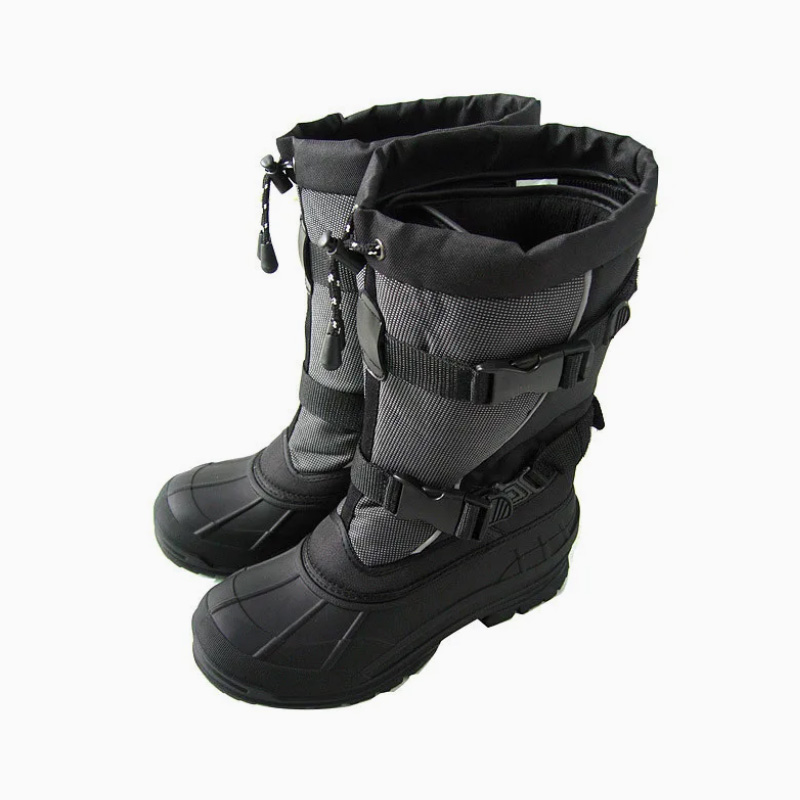
Water-resistant coatings only repel light rain and splashes. True winter conditions require robust waterproofing mechanisms.
Taped or sealed seams are non-negotiable for slush and standing water. Manufacturers apply waterproof tape or liquid sealant over every stitch line during construction. This physical barrier stops moisture from penetrating the needle holes. Without seam sealing, a boot will fail immediately upon stepping into a slush puddle.
You must evaluate the necessity of breathable waterproof membranes versus impermeable rubber shells based on your activity intensity. Breathable membranes, like Gore-Tex or proprietary brand equivalents, allow sweat vapor to escape while blocking liquid water. They excel during high-output activities. Alternatively, impermeable rubber shells found on Pac boots offer absolute waterproof protection but trap internal moisture. Use rubber shells strictly for low-output or static activities.
Understanding insulation requires looking past marketing claims and examining the actual materials used.
Manufacturers measure synthetic insulation, like Thinsulate or PrimaLoft, in grams per square meter. A 200g rating provides moderate warmth suitable for active winter hiking or brief city commutes. A 400g rating offers substantial warmth for longer exposures and moderate activity. Extreme environments and static activities require 800g to 1200g insulation. The higher the number, the thicker and denser the insulating layer.
Always view manufacturer temperature ratings, such as a "-40°F" claim, with high skepticism. Brands test these ratings in controlled laboratory environments. Real-world warmth depends entirely on the wearer's circulation, metabolic rate, activity level, and sock choice. A boot rated for extreme cold will still leave you freezing if you sit perfectly still with poor circulation. Base your choice on insulation weight rather than arbitrary temperature scores.
Staying upright on ice requires two distinct outsole features working together.
Look for winter-specific compounds designed to remain pliable in sub-zero temperatures. Technologies like Vibram Arctic Grip or heavily silicated rubber feature microscopic fiberglass or specialized soft rubber nodules. These materials grip wet ice effectively. They remain soft and sticky even when the thermometer drops far below zero.
Wide, deep lugs are mandatory. They bite into loose snow and provide forward traction. More importantly, wide spacing allows the outsole to shed snow naturally as you walk. If lugs sit too close together, snow packs into the grooves. This "packing" turns the sole into a smooth, frictionless surface, rendering the aggressive tread useless.
No single footwear option conquers every winter scenario. You must match the boot category to your specific environment. When shopping for reliable Men Snow Boots, you will typically encounter these distinct categories.
Everyday/Urban Snow Boots: These feature a lower shaft, moderate 200g insulation, and high flexibility. They work best for daily commuting, walking on cleared sidewalks, and short environmental exposures. They transition easily from outdoor cold to indoor heating without causing excessive sweating.
Pac Boots (Heavy-Duty): Characterized by a rubber lower shell, a leather or synthetic upper, and removable felt liners. Built for deep snow and static activities like ice fishing or winter outdoor work. They offer incredible durability and extreme cold protection but provide very low agility.
Winter Hiking Boots: These provide an athletic fit, a moderate shaft, specialized traction, and highly breathable membranes. They are optimized for active movement. During intense hikes, sweating becomes the primary risk factor for cold feet. Breathable membranes prevent sweat accumulation.
Boot Category | Ideal Environment | Activity Level | Insulation Range |
|---|---|---|---|
Everyday/Urban | Cleared paths, slush | Light walking, commuting | 100g - 200g |
Pac Boots | Deep snow, extreme cold | Static, low-movement | 400g - 1200g |
Winter Hiking | Trails, packed snow | Highly active, strenuous | 200g - 400g |
We must differentiate standard winter footwear from snowboard boots and ski boots. Standard winter footwear lacks the high-cuff rigidity and forward-lean mechanics required for binding compatibility. You cannot safely use regular boots for alpine sports. Doing so eliminates essential joint protection and severely compromises your safety on the slopes.
Buying the right category means nothing if the fit restricts your circulation. This is especially true when evaluating Ladies Snow Boots, which sometimes prioritize sleek silhouettes over functional volume.
A tight fit guarantees cold feet. Insulation cannot generate heat; it only traps the heat your body produces. There must be enough dead air space in the toe box to allow for warm air circulation. Furthermore, your toes need room for natural splay when wearing heavyweight merino wool socks. If the boot compresses your foot, it restricts blood flow. Restricted blood flow accelerates frostbite.
Best Practice: Always try on footwear at the end of the day when your feet are slightly swollen, wearing the exact socks you plan to use outdoors. When sizing Kids Snow Boots, parents must be particularly careful to check for toe wiggle room, as children often cannot articulate when a shoe feels too constrictive.
Proper heel retention prevents blisters. Test for heel lift by walking up an incline or stairs. Minor heel lift is completely normal and expected in heavy, rigid Pac boots due to their bulky rubber lowers. However, excessive movement causes severe blistering and accelerates the physical wear on the internal liner. You want the instep area securely locked down while the toes remain free.
Heavy-duty leather footwear requires a distinct break-in period. Set realistic expectations regarding initial stiffness. Full-grain leather uppers combined with thick rubber outsoles will feel rigid out of the box. Over a few weeks of use, the leather warms and begins molding to your foot's unique shape. Do not take brand-new, heavy-duty leather gear on a ten-mile winter hike without breaking them in first.
Follow this structured, three-step logic to identify the perfect pair for your needs.
Analyze your local winter environment. Is it primarily "wet and slushy"? If you face hovering temperatures around freezing with frequent rain and slush, prioritize rubber shells and absolute waterproofing mechanisms. Conversely, if your environment is "dry and bitterly cold," liquid moisture is less of a threat. In this case, prioritize thick insulation, tall shaft heights, and breathable heavy-duty Pac boots.
Be honest about your output. High-output activities require breathability to prevent sweat from freezing inside the shoe. For winter hiking or snowshoeing, choose a lighter boot with a breathable membrane. Low-output activities, like standing at a bus stop or operating a snowblower, require maximum insulation mass. Without physical exertion to generate heat, you need thick, lofty materials to preserve whatever warmth you have.
Assess the initial cost against long-term durability. Boots featuring removable, replaceable felt liners or resoleable outsoles carry a higher initial price tag. However, they offer superior long-term return on investment for heavy users. Instead of throwing away the entire shoe when the insulation packs out, you simply replace the $30 inner felt liner. This strategy ensures your footwear lasts for multiple extreme winters.
Purchasing specialized winter footwear is a non-negotiable investment in your safety, comfort, and prolonged outdoor capability. Relying on basic sneakers or summer hikers exposes you to rapid heat loss and dangerous slips on icy terrain.
Remember that no single boot excels in every winter scenario. The right choice hinges entirely on correctly matching insulation levels, outsole compounds, and shell types to your specific environment and activity level. Do not compromise on the toe box rule; restricted circulation ruins even the most heavily insulated footwear.
Review your local winter temperature and precipitation averages before shopping.
Determine whether you need breathable activewear or impermeable static warmth.
Select a boot category that perfectly aligns with your most frequent exposure scenario.
Take action today to audit your winter gear. Ensure your next purchase addresses the severe realities of ice, snow, and sub-zero temperatures.
A: No. Snow boots lack the necessary structural rigidity, ankle support, and standardized footprint required to safely engage with ski or snowboard bindings. Attempting to use them risks severe injury and equipment failure.
A: Yes, for highly active use (like winter hiking) or standard urban commuting in moderate freezing temperatures. For stationary activities or extreme sub-zero climates, 400g to 800g+ is required.
A: Generally, yes. Sizing up by a half or full size accommodates thicker winter socks and preserves the vital air pocket around your toes, which is necessary for the insulation to trap body heat effectively.
A: Rinse with a mixture of equal parts water and white vinegar immediately after exposure to prevent road salt from degrading the waterproofing membranes and drying out leather uppers.


